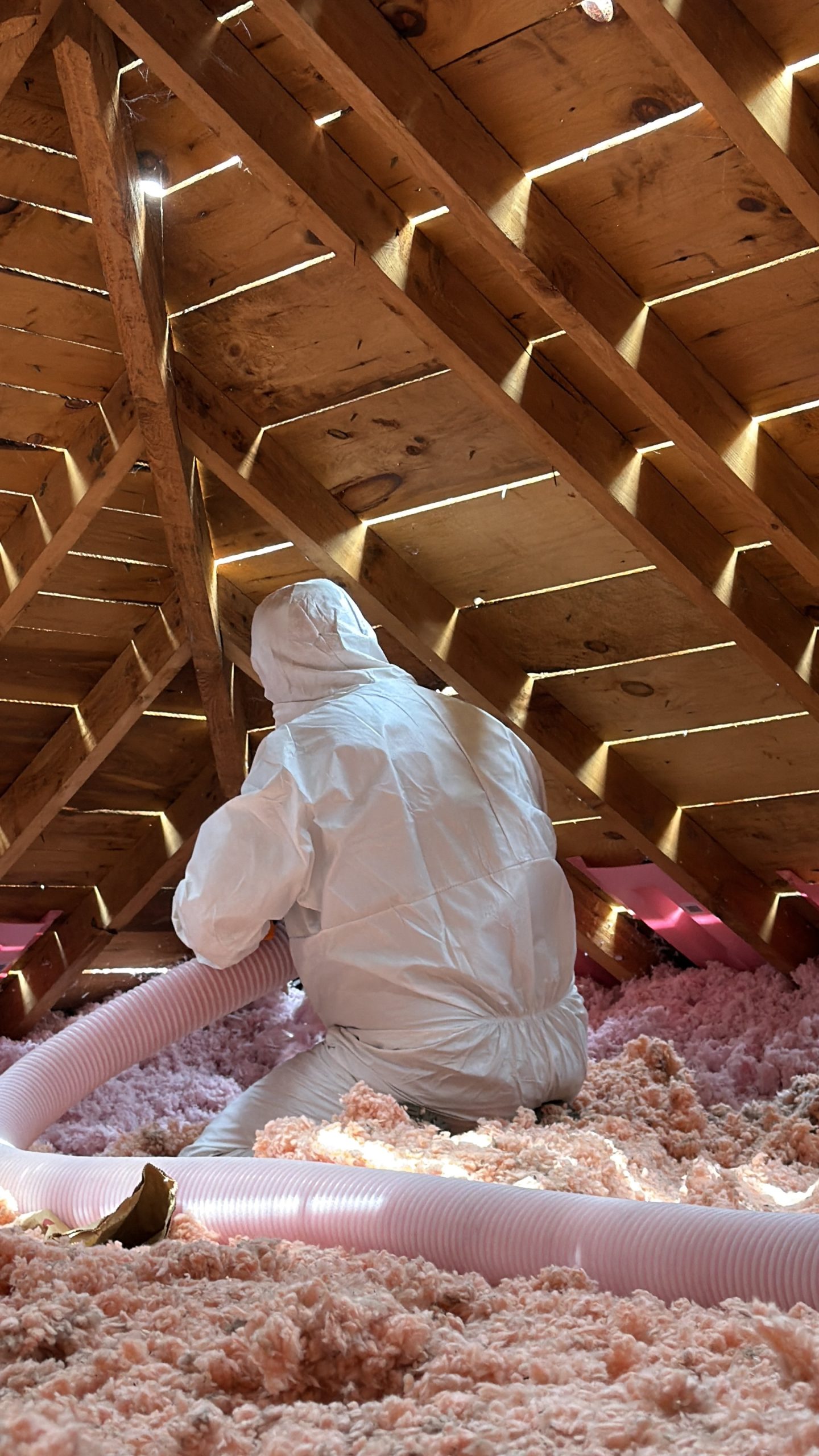
Many home owners ask if upgrading to attic insulation R60 Ontario standards is truly needed or just an upsell. As cold winds blow across Georgian Bay and Muskoka, heating bills rise fast while upper bedrooms stay chilly. Often, people wonder why one roofer ignores the attic while another suggests adding more blown wool. So, knowing how thermal codes work helps you make a smart, money-saving choice for your home. In Ontario, attic insulation reaching R60 is typically considered the benchmark for best efficiency.
A home roof and attic work as one complete building envelope system. When a roof team only nails down shingles, they ignore half of your winter defense. In contrast, Ainger Group checks your attic wool depth, vents, and roof deck as a single unit. Therefore, clearing up code rules ensures you never pay for unneeded work while protecting your home from winter damage, especially under attic insulation R60 Ontario requirements.
Cheap lump-sum roofers often skip attic checks because they want to finish quickly and move on. But leaving your ceiling with old, thin wool leads to severe winter ice dams and drafty rooms. In contrast, our team provides honest guidance grounded in building science and photo proof. Here is what local property owners need to know about modern thermal rules.
What the Ontario Building Code Attic Insulation Standard Means
The current Ontario building code attic insulation standard sets ceiling heat hold at an R-60 level. In simple terms, R-value measures how well a home material resists the natural flow of heat. A higher R-value means heat stays inside your living space rather than escaping through the roof deck. Crucially, meeting this code standard requires about twenty inches of fluffy blown wool across the ceiling flat. Properly installed attic insulation R60 Ontario products help meet this requirement for energy savings and comfort.
Most older homes built across Barrie, Orillia, and Collingwood contain far less heat defense than modern code requires. In fact, many houses built decades ago have only six to eight inches of settled batt fill. That thin layer provides a weak rating between R-20 and R-28. As a result, huge amounts of costly indoor heat bleed right up into the cold attic space.
When heat escapes into the attic peak, it warms the bottom of the cold roof plywood. This rising heat melts rooftop snow too soon, sending melt water down toward freezing cold gutter lines. Once that water reaches the cold eaves, it freezes into thick ice dams that force water under shingles. Thus, reaching the modern R-60 target stops heat loss and cuts off the water feeding winter ice dams.

Is Adding Extra Attic Wool an Upsell or a Real Need?
A major worry for home owners is whether an attic top up insulation quote is an unneeded upsell. At Ainger Group, we believe in honest guidance, clear checks, and total pricing clarity. We never push extra blown wool on homes that already have strong heat shields. Instead, our Project Leads use physical measuring rulers to check your existing wool depth with care.
If your attic already holds sixteen to eighteen inches of healthy wool, adding more fill offers small return. In those cases, we tell you straight out that your attic depth is fine. But if your wool has settled below ten inches or shows dark air draft stains, topping up is vital. Adding fresh blown wool restores heat hold, lowers monthly heating costs, and boosts year-round home comfort. Ultimately, the best solution for energy efficiency is typically attic insulation R60 Ontario code recommends.
Plus, our team provides line by line quotes with clearly marked basic scopes and optional upgrade paths. You receive sharp photos showing your exact wool levels before you make any buying choice. This open process removes sales pressure, stops surprise fees, and keeps you in full control of your budget.
Meeting the R Value Requirement Ontario Homes Need for Winter
Meeting the full R value requirement Ontario climates demand involves far more than simply blowing in fresh wool. If an untrained crew blows wool over open gaps, warm air drafts will still slip right through. For this reason, our skilled workers complete key air-sealing steps before any new wool goes down. We seal around wire drops, pipe boots, and ceiling pot lights with expanding foam.
In addition, we seal and wrap the wooden attic hatch door with thick foam board. An unsealed attic hatch acts like an open chimney, venting costly furnace heat into the cold roof peak. Sealing these hidden bypass gaps ensures your new wool performs at its true lab-tested R-value. So, your home retains steady warmth even during sub-zero Muskoka cold snaps.
Just as vital is protecting balanced attic vents under the 1:300 building code ratio rule. When blowing in deep wool, sloppy roofers often block lower soffit vents, trapping damp air inside the peak. To prevent this hazard, our crews install stiff rafter baffles in every bay before adding wool. Thus, fresh outdoor air flows freely from soffits to ridge vents, keeping your roof deck dry and frost-free. For those living in Muskoka and the Georgian Bay area, attic insulation R60 Ontario levels help prevent these common issues more effectively.
The Ainger Advantage: Trusted Whole-Home Envelope Care
Choosing Ainger Group for your attic upgrade delivers proven peace of mind from start to clean finish. First, our team provides upfront proof of five million dollars in liability insurance and active WSIB proof. You never face legal risk or safety liability when our certified crews work in your home. Next, our Pre-Project Concierge handles job dates and answers your questions clearly.
During the install, our on-site Project Lead watches every step to ensure proper wool depth and baffle placement. We use clean hoses and floor tarps to keep your hallways and floors spotless. Plus, our crews run magnet nail sweeps around all outdoor work zones to keep driveways and walkways clean. So, you enjoy a smooth, zero-headache experience with no mess left behind.
Finally, we deliver our Homeowner Proof Report with full photo proof when the project wraps up. This full report proves your new wool depth, sealed bypass points, and clear air vent paths. You get proven building code compliance, zero surprise fees, and lasting heat defense for decades to come.
Claim Your Free 72-Point Assessment
For regular updates follow our LinkedIn.