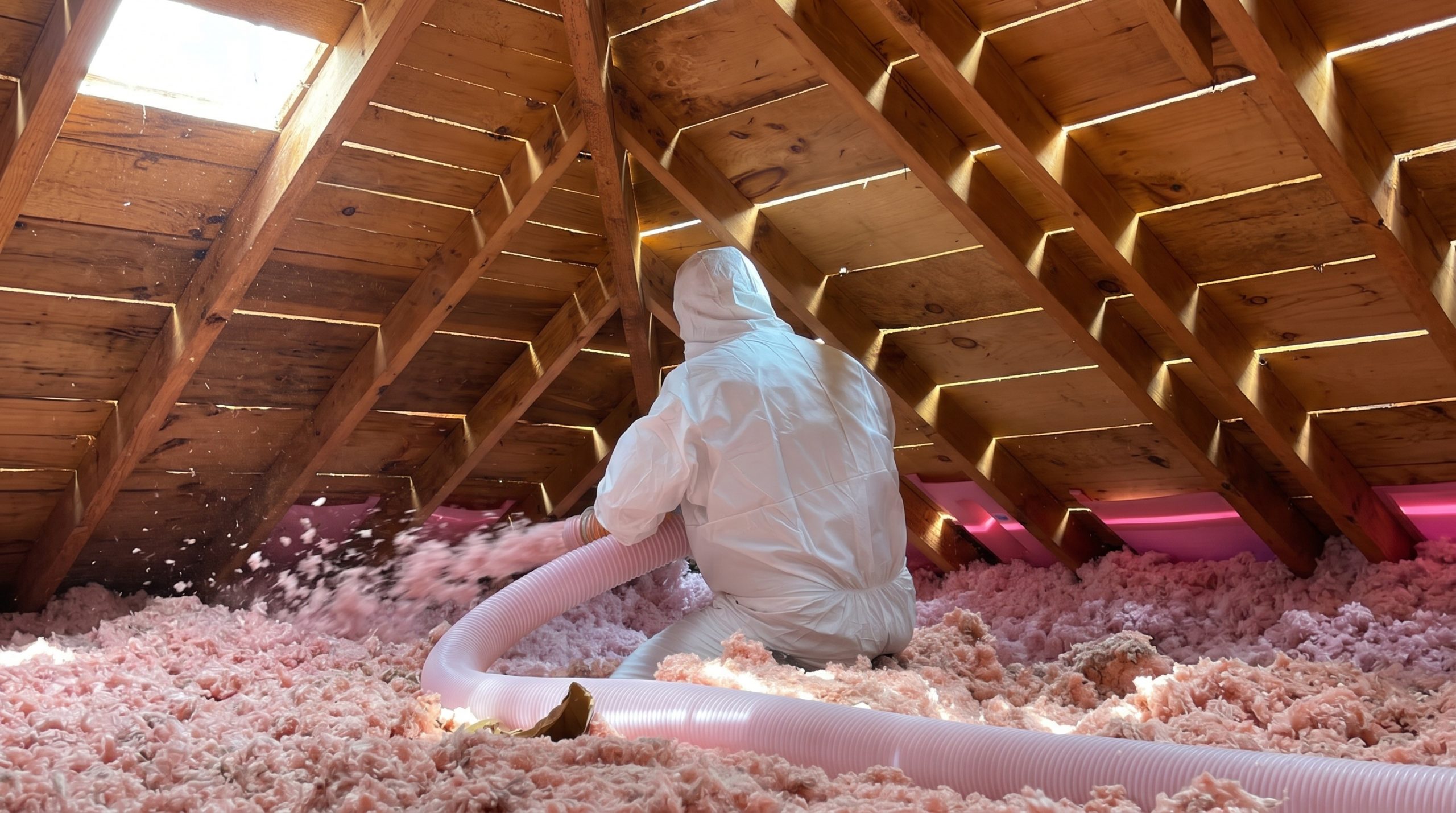
When winter cold rolls, homeowners start looking for trusted insulation contractors to upgrade their attic insulation. As weather turns cold, drafty ceilings send heat straight out the roof. Your furnace runs non-stop, heating bills climb, and heavy ice dams form along your gutters. So, taking action before deep winter hits saves your home from costly water damage.
Many people know their attic needs help, but high project costs cause doubt. Fortunately, Homeowners can now tap into the Home Renovation Savings program backed by Enbridge Gas. This program offers real cash rebates to help pay for your attic top-up. Plus, you do not need to pay for an expensive upfront energy audit to qualify.
At Ainger Group, we want to help you tap into these energy grants safely. We are an approved contractor listed under Ainger Group on the official program list. That means our team can inspect your attic, check your fit, and handle all the rebate paperwork for you. Here is your complete guide to how the rebate works, what you get back, and how to qualify.
The 2026 Enbridge Attic Insulation Rebate Program Explained
The Home Renovation Savings program makes home energy upgrades simple and low-cost for families. In past years, older rebate programs forced homeowners to pay hundreds of dollars for home energy audits first. If you did not finish multiple complex home fixes, you lost your money. In contrast, this new Enbridge rebate offers a dedicated, standalone path for attic insulation upgrades.
This means you can upgrade your attic insulation on its own without touching your furnace or windows. However, program eligibility depends strictly on how your home is heated. To qualify, your property must meet the official utility criteria:
“Be an Enbridge Gas customer with an active account and primarily heat your home with a natural gas furnace or boiler OR be connected to the Ontario electricity grid and heat your home with electricity, oil, propane, or wood.”
You simply need an approved contractor to check your starting insulation level before any work begins. Once our team confirms your attic qualifies, we finish the install and submit your file directly to Enbridge.
Then, Enbridge processes your completed file and mails a rebate cheque straight to your mailbox. You never have to wrestle with tricky web portals or confusing utility forms. We take care of the heavy lifting from the first attic check to the final rebate submission.
How Much Can You Get Back? Rebate Tiers and Payout Limits
The exact rebate cash you receive depends on how much old insulation now sits in your attic. In simple terms, homes with the least amount of old insulation qualify for the largest rebate cheques. The program goal is to bring older, cold attics up to modern standards of R-50 or higher.
To help you plan your budget, here is the official breakdown of current attic rebate tiers:

However, you must keep one key program rule in mind about project costs. The Enbridge rebate can cover up to fifty percent of your total bill before taxes. For example, if your attic upgrade costs two thousand dollars, an approved rebate covers up to one thousand dollars. That cuts your out-of-pocket home fix cost right in half while cutting your monthly gas bills for good.
Why Certified Insulation Contractors Must Handle Your Application
You cannot buy bags of loose insulation at a big box store, blow it yourself, and collect a rebate. The Enbridge program strictly requires homeowners to work with certified insulation contractors. This rule exists to protect homeowners from sloppy DIY work that causes attic moisture and mold.
To approve your rebate payout, Enbridge requires strict photo proof before and after the job. Our team must place measuring rulers throughout your attic and take date-stamped photos of the old insulation. Next, we document our air-sealing work and take photos showing the new R-50 insulation depth. If these photos are missing or taken wrong, the program rejects the claim completely.
Because Ainger Group is an approved contractor, we manage this entire photo proof process for you. We upload all required photos, invoice copies, and property records straight into the Enbridge system. So, you enjoy complete peace of mind knowing Enbridge will approve your rebate without delays or rejected claims.
Tailoring Attic Insulation to Your Roof Soffit Depth
Not every home attic is built the same way. Older homes often feature narrow roof eaves with very shallow soffit overhangs. In contrast, newer homes often have deep, wide soffit spaces. If your attic has tight edges, blown-in insulation provides higher heat hold in less roof space. But if your soffit vents are shallow, heavy insulation can spill over the eaves and block fresh air intake. In those tight spaces, our crews install stiff rafter baffles and use blown-in insulation to keep intake airflow open. Keeping those air paths clear prevents damp air from turning into winter frost on your roof boards.
By matching the insulation type to your exact soffit depth, we protect your whole roof deck. You get maximum winter heat hold, lower energy bills, and clean airflow that stops ice dams before they start.
Common Rebate Pitfalls: The Wrong Way vs. The Right Way
As home energy grants grow in popularity, many homeowners hear confusing claims about how rebates work. You might hear offers for completely free insulation or promises that sound too good to be true. However, understanding official program rules protects your budget and helps you avoid costly contract errors. Here is how to tell the wrong way from the right way to use your rebate.
The wrong approach assumes that energy rebates cover one hundred percent of your project invoice. In reality, the Home Renovation Savings program pays up to fifty percent of eligible project costs. So, any offer promising zero out-of-pocket costs often hides the remaining balance in high-interest financing contracts. The right approach is reviewing an itemized quote that clearly shows your true net investment.
Another wrong approach is trying to deduct the rebate grant directly off your initial insulation contractor invoice. Under utility guidelines, the program issues the rebate cheque straight to the property owner after review. Therefore, the right approach is paying your certified insulation contractor normally and receiving your official rebate cheque directly from Enbridge. This transparent process guarantees your job meets all utility standards.

A frequent mistake in home insulation projects is treating the attic floor like an isolated storage room. Adding deep insulation without inspecting roof vents creates serious moisture problems over time. Your roof and attic must work together as one balanced breathing system. If fresh outdoor air cannot flow through the vents, your home will suffer from trapped dampness.
Every healthy roof needs a clear airflow path from the eaves up to the ridge. Cool outdoor air enters through the lower soffit vents along your roof overhangs. Then, that fresh air sweeps across the roof deck and exits through the vents. This steady airflow carries away warm moisture before it can soak into your wood framing.
Crucially, the building code requires a balanced one-to-three-hundred ventilation ratio for all attics. This rule requires one square foot of vent space for every three hundred square feet of ceiling. Blowing loose fill insulation right over the soffits blocks fresh air intake entirely. In contrast, the right method installs rigid rafter baffles in every bay before blowing in new insulation.
When moist air cannot escape, it freezes into thick ice on cold roof plywood during winter snaps. Once the sun warms the roof, that ice melts and drips down like indoor rain. This moisture ruins insulation, damages structural roof boards, and can lead to mold growth. So, protecting roof airflow is just as vital as adding deep blown-in insulation.
Blowing fresh wool over open ceiling cracks is like wearing a warm knit sweater on a windy day. The cold wind blows right through the open weave, carrying away your warmth. In your home, warm room air naturally rises and looks for small gaps to escape into the attic. For this reason, professional air-sealing must happen before any new wool goes down.
Covering unsealed electrical holes, plumbing stacks, and pot lights with fresh wool leaves drafts active. Instead, the right method carefully seals every bypass point with expanding foam before adding new fill. These small ceiling cracks might look minor, but together they act like an open window. Sealing them locks your expensive furnace heat inside your living rooms where it belongs.
In addition, the right approach always includes building a sealed, insulated cover box for your attic hatch. An unsealed wooden hatch acts like an open chimney, venting heated room air straight into the roof peak. We line the hatch frame with weather stripping and add heavy foam board on top. Thus, your home stops losing costly heat, keeping your monthly energy bills lower.
The Right Way to Prevent Destructive Winter Ice Dams
When warm indoor air bleeds into your attic, it triggers heavy ice dams along your roof edges. The warm air heats up the underside of your roof plywood and melts the snow sitting on top. That meltwater trickles down the slope until it reaches the cold roof overhang. Because the gutters hang past the warm house walls, the water freezes into solid ice.
Day after day, that ridge of ice grows thicker until it blocks all natural water drainage. Trapped meltwater pools behind the ice ridge and pushes backward right under your shingles. Eventually, that backed-up water rots your roof boards and leaks into your bedroom ceilings. This water intrusion causes stained drywall, ruined floors, and expensive emergency repairs.
Temporary fixes do not solve the underlying issue. The right solution is stopping heat loss at the source with proper attic insulation contractors and air-sealing. Keeping your roof deck cold keeps snow frozen naturally, protecting your roof from winter leaks.
How Our Free 72-Point Assessment Secures Your Rebate
Getting your energy rebate starts with an accurate home check. Because program rules require exact before-and-after proof, guessing your attic insulation depth can void your claim. At Ainger Group, we remove all guesswork with our free 72-point building envelope assessment. Our certified insulation contractors visit your home to inspect your roof deck, vent balance, and current insulation levels.
During this check, our assessment specialists place depth gauges across your entire attic floor. We document the exact starting depth with clear, date-stamped photos needed by the utility program. In addition, we inspect your lower soffit vents, exhaust vents, and hidden ceiling air leaks. This thorough check ensures we design an upgrade plan that meets all rebate rules.
Next, you receive a clear, line-by-line quote that separates essential work from optional upgrades. We never pressure you to sign a contract on the spot or push unnecessary additions. Once you approve the project, our Pre-Project Concierge handles all dates and crew schedules in advance. Meanwhile, an on-site Project manager watches every build step to guarantee proper insulation depth.
Best of all, our team handles one hundred percent of the rebate submission process for you. We compile your date-stamped photos, certified contractor proof, and invoice records into the official utility portal. You never have to deal with tricky online grant forms or worry about rejected paperwork. A complete, properly documented application can improve your chances of rebate approval. If approved, your rebate cheque is mailed directly to your home.
Do not wait for winter freeze-up to discover drafty ceilings, spiking heating bills, and destructive ice dams. Partnering with certified insulation contractors ensures your attic receives the right insulation depth, balanced airflow, and verified rebate approval. Contact Ainger Group today to claim your Free 72-Point Assessment and secure your energy rebate before winter arrives.
Frequently Asked Questions About Attic Insulation Rebates
No, the current standalone attic stream does not require pre- or post-work energy audits. Unlike older programs that forced homeowners to hire energy advisors, this path saves you hundreds in upfront fees. As an approved contractor, Ainger Group completes the required diagnostic inspection directly at zero cost to you.
Most older homes built decades ago contain between four and eight inches of settled batt fill. As long as your starting level sits at R-35 or less, you qualify for real rebate cash. However, if our physical depth check reveals your attic already holds sixteen inches of healthy insulation, we tell you honestly. We never recommend unnecessary upgrades when your home already meets modern heat standards.
Yes, you can often combine standalone attic upgrades with separate heat pump or window grant programs. However, rules depend on the specific funding source for each upgrade. Our insulation contractors review your long-term renovation plans during your assessment to help you maximize your total grant return.
Eligible homeowners can receive between $650 and $1,250 depending on their starting insulation depth. However, the rebate covers up to 50% of your eligible invoice before taxes. Believing that government grants make attic insulation completely free is a common mistake. In contrast, the right approach budgets for a shared investment that cuts your out-of-pocket costs in half.
Under official utility guidelines, the program issues the rebate cheque directly to the property owner. The wrong method is trusting salespeople who promise instant invoice deductions to close a deal on the spot. In fact, this tactic often masks inflated pricing or hidden financing fees. The right method is paying your certified contractor normally and receiving your official rebate cheque straight from Enbridge.
Homeowners typically receive their rebate cheque within 60 to 80 days after final project approval. Because our team submits clean, photo-verified documentation right after installation, your file moves through review without friction. In addition, your Pre-Project Concierge tracks your submission so you always know where your file stands in the queue.
Yes, detached homes, semi-detached houses, townhomes, and residential rental properties can qualify if they meet utility heating criteria. As long as the property heats with natural gas, electricity, oil, or propane, you can apply. Upgrading rental attics lowers operating costs, prevents tenant heating complaints, and protects your building shell from winter moisture damage.
We only recommend attic upgrades when physical measurements prove your home is losing expensive heat. During our check, our Project Leads place metal depth gauges across your attic flat to calculate true R-value. If your attic already holds 16 inches of healthy insulation, we tell you straight out that your depth is fine. We never push extra material when your home already meets modern thermal targets.
You can easily estimate your current R-value by measuring the thickness of your existing attic fill. For example, older batt fill usually provides about R-3 per inch of depth. If your attic has 6 inches of settled fill, you only have about R-18. Today, modern building standards call for R-50 to R-60, which requires roughly 16 to 20 inches of blown insulation.
In most homes, crews can safely blow fresh cellulose or fiberglass directly over clean, dry existing insulation. However, the wrong method is blowing fresh insulation over active animal waste, moldy backing, or water-damaged fill. If our team finds moisture or contamination, we safely remove the old fill before blowing fresh, clean insulation. This careful inspection guarantees your indoor air stays healthy and clean.
Both materials qualify for the full rebate as long as the finished depth reaches R-50 or higher. If your home has tight roof overhangs, blown cellulose packs more heat resistance into less vertical height. For properties with deep eaves, blown fiberglass provides lightweight coverage with virtually zero settling over time. We tailor the material choice directly to your roof design to prevent blocked airflow.
Blowing fresh insulation over open ceiling cracks is like wearing a knit sweater in cold wind. The air draft slips right through the fibers, carrying away expensive room heat. Warm indoor air rises naturally and escapes through light fixtures, wire drops, and plumbing stacks. Therefore, sealing these bypass gaps with expanding foam locks heat inside before new insulation goes down.
Yes, proper insulation stops ice dams by keeping your roof deck cold throughout the winter months. Ice dams form when escaping room heat melts the underside of rooftop snow. That water runs down the slope and freezes solid once it hits the cold gutter line. Adding deep insulation and sealing air leaks stops heat loss, keeping rooftop snow frozen naturally until spring.
Extra insulation can trigger serious moisture issues if an installer blocks your fresh air intake vents. Dumping loose insulation directly over the eaves suffocates the attic space. In contrast, the right method installs rigid rafter baffles in every bay before blowing any new insulation. These baffles protect continuous airflow, flushing out warm moisture before it can cause wood rot or mold.
Many contractors only look at shingles or only blown-in insulation, ignoring how the roof and attic interact. At Ainger Group, we inspect your roof shingles, roof deck, ventilation balance, and attic insulation as one complete system. Our single-accountable process ensures your new insulation works with your roof, protecting your home from drafts, leaks, and ice dams.
No, the Enbridge program strictly requires homeowners to work with certified, registered insulation contractors. The utility enforces this rule to protect property owners from poor air-sealing and blocked ventilation. To approve your payout, Enbridge requires date-stamped photographic proof with measuring rulers submitted through a secure contractor portal.
Be cautious of anyone who knocks on your door claiming that utility companies sent them to install free insulation. Legitimate rebate programs never send aggressive salespeople door-to-door, nor do they cover 100% of project bills. Often, these offers hide the remaining balance in high-interest financing contracts. Always verify that your contractor is an approved vendor listed on the official program directory.
Ready to verify your starting R-value and secure your Enbridge rebate?
For regular updates follow our LinkedIn.