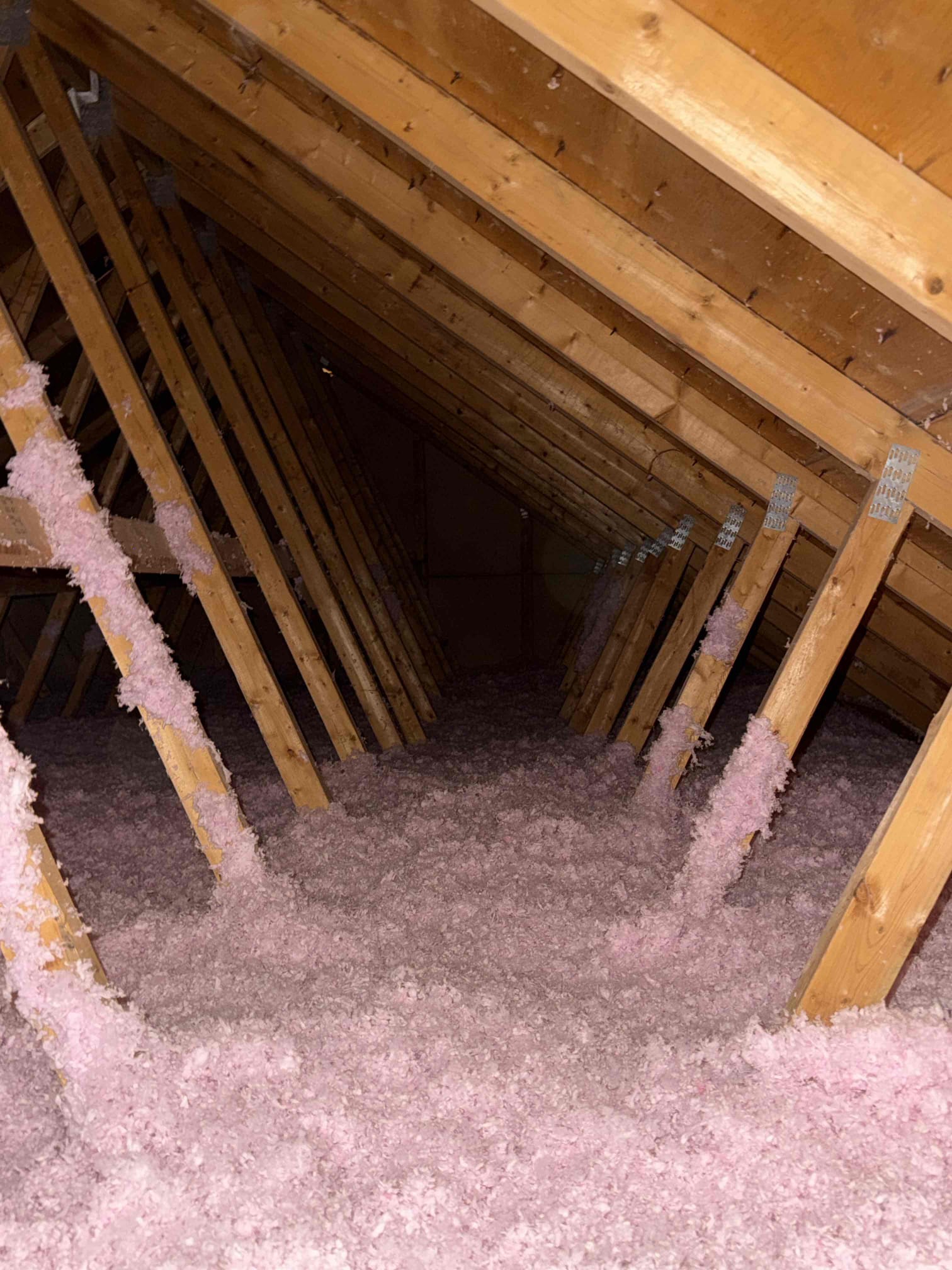
When winter weather hits Central Ontario, your furnace works overtime to keep your home warm. If your upper bedrooms feel freezing cold, your attic is likely losing expensive heat. If you want to know how to check attic insulation depth, you might wonder how to get the right information without dealing with pushy sales tactics. Finding your true insulation depth is the first step to lowering your winter energy bills. When you know your true R-value, you can make smart choices that protect your home.
As the caretaker of your home, you want reliable solutions that deliver real value. Many people know their attic needs help, but high project costs cause hesitation. Fortunately, checking your insulation takes only a few minutes and costs absolutely nothing. Here is exactly how to check attic insulation depth and find out if you qualify for utility cash rebates.
The Wrong Way vs. The Right Way To Check Attic Insulation Depth
The wrong way to check your attic is simply poking your head up the hatch and guessing. Many people assume their insulation is fine simply because it looks fluffy from a distance. However, old insulation settles over time and loses its ability to hold heat. Furthermore, visually guessing your depth completely ignores hidden draft gaps and blocked air vents.
The right way to check your attic is using a simple measuring tape or ruler. If you are unsure how to check attic insulation depth, you need exact numbers to understand your true thermal protection. By physically measuring the depth, you remove all guesswork from the equation. Thus, you gain a clear picture of exactly how much heat your home is losing.
How to Check Attic Insulation Depth with a Simple Ruler
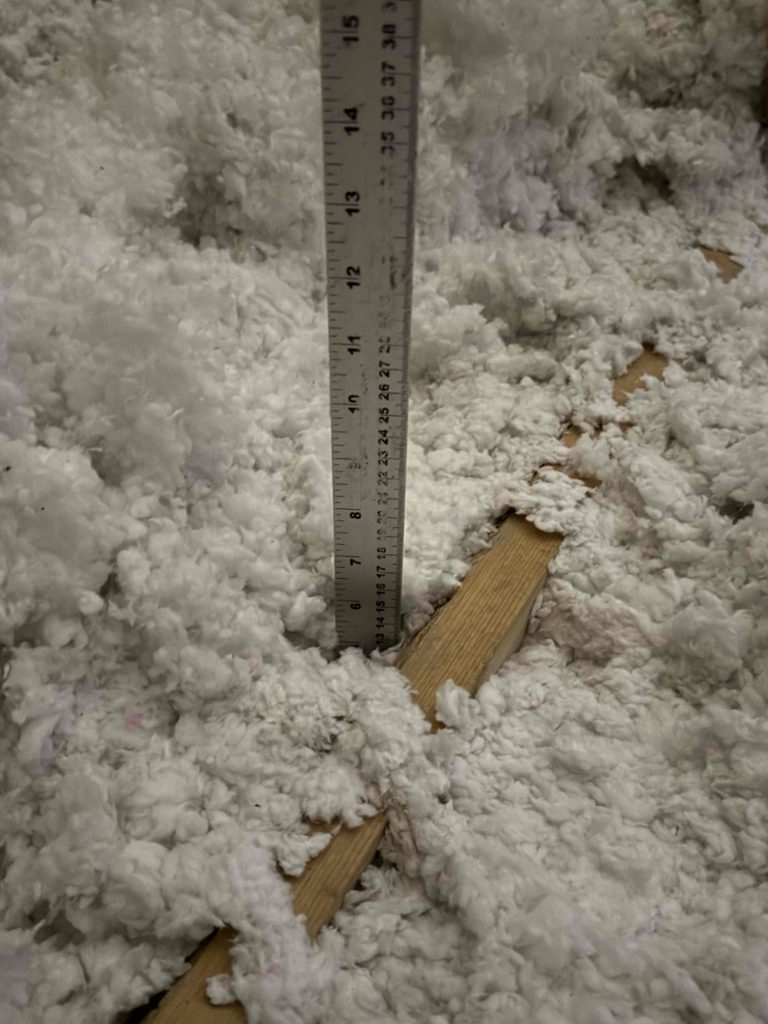
Grab a standard metal measuring tape and safely open your ceiling attic hatch. You do not need to climb all the way inside the dark roof space. Simply slide the ruler down into the insulation until it hits the hard drywall ceiling below. Read the number in inches directly off the tape.
You should test a few different spots near the hatch to find your average depth. Insulation often blows around and settles unevenly over the years. This simple check takes two minutes but gives you a massive advantage. Now, you hold the exact data you need to calculate your true winter heat defense. In summary, learning how to check attic insulation depth can help you make informed decisions and save on energy costs.
Translating Your Ruler Inches into R-Value
Once you know your average depth, you can easily figure out your R-value. In plain terms, R-value measures how well your insulation stops heat from escaping your home. For most older homes, standard batt or loose insulation gives you about R-3 for every inch.
If your ruler shows less than four inches, you have an R-12 rating or lower. This is a severe problem that causes massive heat loss and aggressive winter ice dams. If you measure between four and eight inches, your attic sits around R-15 to R-25. While this is common for older homes, it still falls far below modern building science standards.
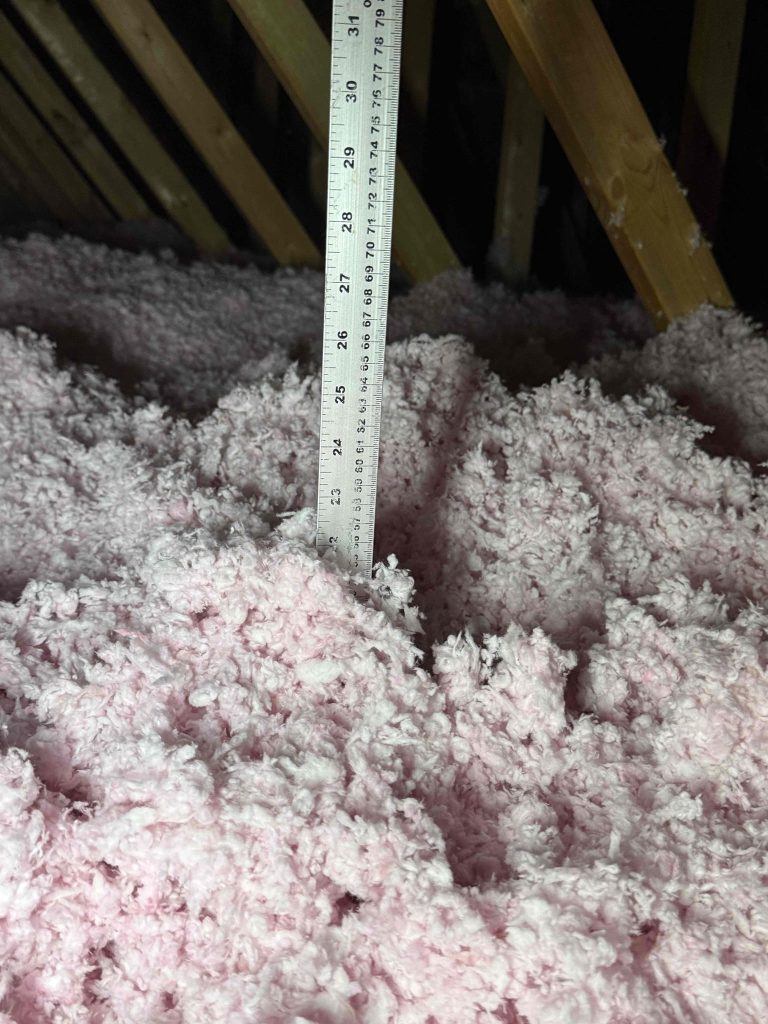
Today, the Ontario Building Code requires a strict thermal target of R-50 to R-60. To hit that safe target, your attic needs about sixteen to twenty inches of fresh blown-in insulation.
Why Knowing Your Depth Unlocks Cash Rebates
If your measurement shows less than eight inches of existing fill, you are in luck. Your home likely qualifies for the highest payout tiers available through current utility incentives. Read our https://aingerroofing.ca/the-attic-insulation-rebate-guide/ to see the exact payout tiers and cost limits for your home. You can often recover up to fifty percent of your project costs just by upgrading your thermal depth.
The Wrong Way vs. The Right Way to Hire a Contractor
Finding out you need more insulation is only half the battle. The wrong way to fix the problem is hiring the cheapest contractor who drops a flyer in your mailbox. Cheap lump-sum quotes often hide the true cost of the job in the fine print. These cut-rate crews regularly skip vital air-sealing steps and blow insulation right over your fresh air vents.
The right way is partnering with a trusted, certified building-envelope specialist. At Ainger Group, we treat your roof, attic, and vents as one connected breathing system. We back every single project with five million dollars in liability insurance and full WSIB compliance. With over thirty-five years of family ownership and fifteen hundred positive reviews, we deliver guaranteed peace of mind.
The Ainger Free 72-Point Assessment
We know that busy homeowners value transparent pricing and honest, straightforward advice. That is why our Pre-Project Concierge handles all your scheduling and answers your questions upfront. When our on-site Project Lead arrives, we run a complete 72-point building envelope assessment. We take date-stamped photos of your current insulation depth using our own certified metal gauges.
Next, we provide a clear, itemized quote with zero surprise fees or hidden charges. If your home qualifies for the utility rebate, our team handles one hundred percent of the portal submission. You never have to deal with confusing government paperwork or frustrating online forms. You simply get a warm home, lower energy bills, and a rebate cheque mailed directly to your door.
Do not let another winter drain your wallet and damage your roof deck. Protect your home with Central Ontario’s most trusted exterior experts today.
Claim Your Free 72-Point Assessment
For regular updates follow our LinkedIn.