
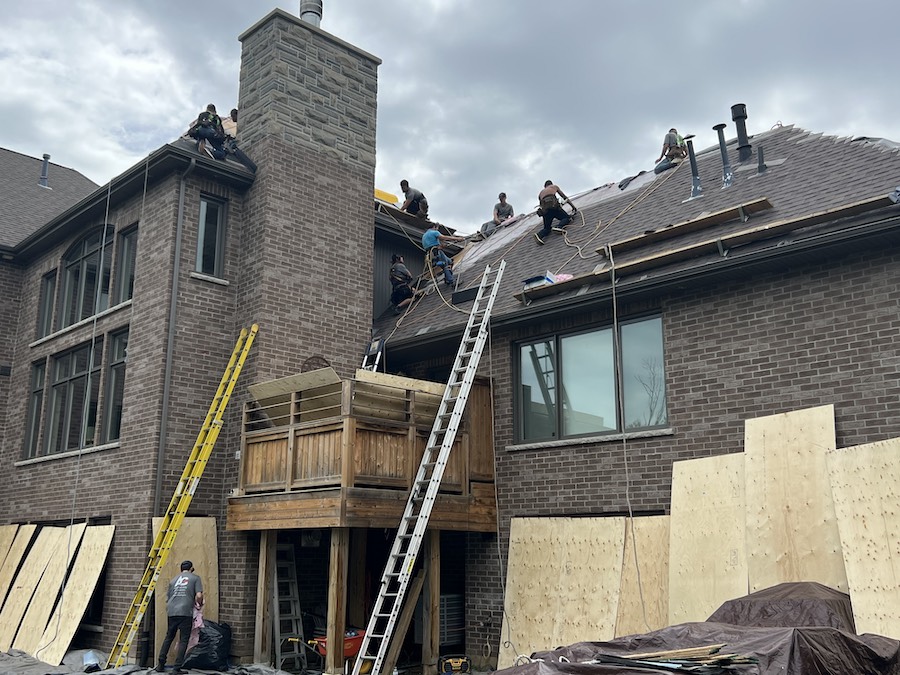
Historic homes are a sight to behold. They stand as monuments of local history and represent a rich tradition of architectural craftsmanship. However, along with their beauty comes a set of maintenance challenges that can be daunting for property owners. One of the most common issues affecting historic properties is heritage home chimney leaks.
Old masonry chimneys are frequently the primary culprit behind severe roof damage. In this guide, we discuss how aging chimneys allow water penetration and why contacting a Barrie roofing professional can help maintain the structural integrity of your roof.
1. Damaged Flashing and Heritage Home Chimney Leaks
Chimney flashing is a critical component of any roofing system. Specifically, flashing consists of metal strips fitted around the base of the chimney to create a watertight seal where the masonry meets the roofline.
Over time, exposure to harsh freeze-thaw cycles causes metal flashing to rust, warp, or pull away from the brick. Consequently, when flashing degrades, rainwater easily penetrates the roof deck and causes severe water damage inside your home’s walls and ceiling.
2. Brickwork Deterioration and Chimney Roof Leaks
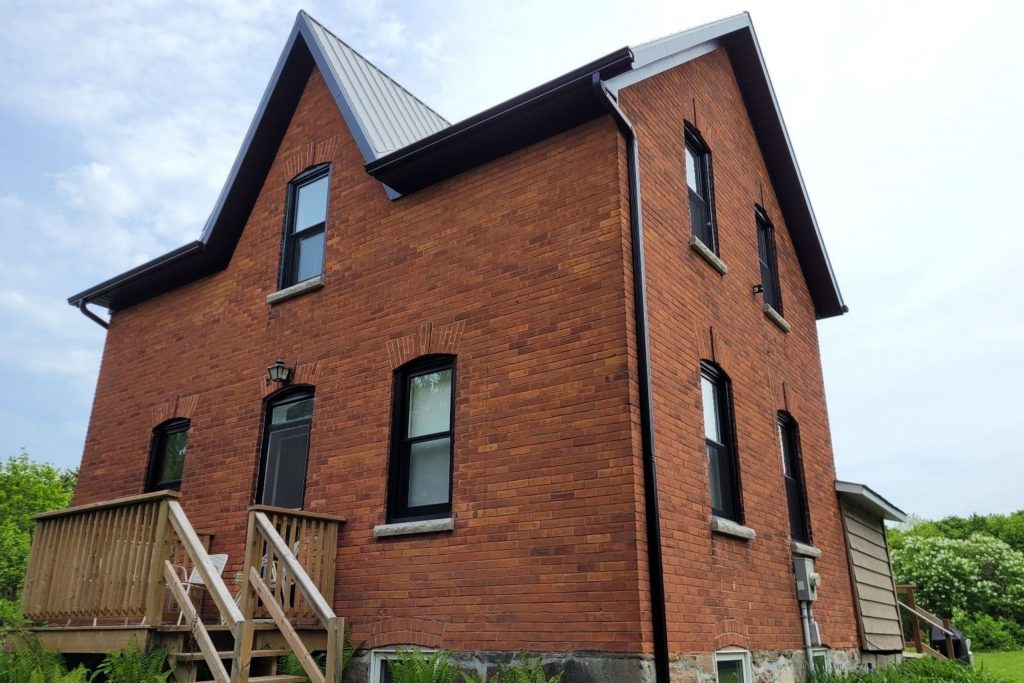
Another major cause of heritage home chimney leaks is the natural deterioration of surrounding brickwork and mortar. Older masonry materials are highly porous and absorb moisture during heavy rainstorms.
During winter, trapped water freezes and expands within the brickwork. As a result, the mortar crumbles and the bricks crack over time. This structural decay allows water to seep directly through the porous chimney body and settle into your attic space.
3. Lack of Routine Maintenance Leads to Leaks
Like any structural feature, heritage home chimney leaks require consistent maintenance. However, because chimneys are situated high above ground level, property owners often neglect them until visible damage occurs.
A lack of maintenance leads to several compounding problems:
- Debris Accumulation: Leaves and twigs collect behind the chimney, holding trapped moisture against the roof.
- Animal Nesting: Birds or small animals can block proper drainage paths.
- Masonry Decay: Small mortar hairline cracks quickly expand into major structural gaps.
Ultimately, neglecting routine inspection schedules turns minor surface wear into catastrophic structural leaks.
4. Roof Slope and Design Vulnerabilities
The slope and architectural design of your roof also contribute to heritage home chimney leaks. Many historic properties were constructed well before modern building codes optimized water runoff strategies.
For example, a steeply pitched roof causes fast-moving rainwater to rush down and potentially bypass worn flashing. Conversely, flatter roof sections accumulate snow and ice dams around the chimney base. In addition, without modern underlayments, older roof designs are far more prone to water pooling behind the chimney structure.
Preventing Heritage Home Chimney Leaks with Ainger Group
Preserving a historic property requires specialized care. Because aging masonry and delicate rooflines demand expert handling, heritage roof repairs should never be attempted as a DIY project.
If you suspect water damage around an old chimney, scheduling a professional inspection is the safest course of action. Our team can assess flashing integrity, evaluate masonry decay, and perform necessary roof repairs to restore your home to its former glory.
Contact Ainger Group today to protect your investment and preserve your home’s historic charm for years to come.