
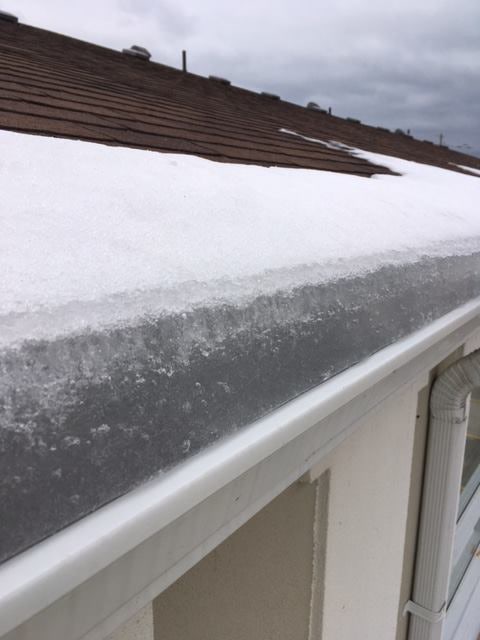
Winter weather brings severe snow accumulation across Ontario roof decks every season. Consequently, understanding how a Rooftop Ice Dam forms helps you prevent catastrophic indoor ceiling leaks. Specifically, heat escaping from warm attics melts snow on upper roof slopes, sending water toward cold eave edges. Furthermore, taking proactive insulation and ventilation steps protects your shingles before winter storms arrive.
In this guide, our team at Ainger Group explains the dangers of rooftop ice dams and how to prevent them effectively.
To learn about local service options, check out our roofing in Barrie page.
How a Rooftop Ice Dam Threatens Your Home
Ice accumulation along eave edges creates heavy barriers that trap liquid water on shingle surfaces.
First, warm indoor air leaks into uninsulated attic spaces, warming the roof deck above freezing.
Second, melting snow flows down sloped roof decks until it reaches cold outer eave edges, where it refreezes instantly into a thick ridge.
Third, trapped water backs up beneath asphalt shingle tabs, saturating underlayment sheets and rotting plywood decking.
Fourth, heavy ice ridges tear away aluminum eavestroughs and damage underlying fascia wood. So, addressing a Rooftop Ice Dam quickly stops structural decay before interior ceilings collapse.
Identifying Indoor Damage from Rooftop Ice Dams
Water trapped behind ice ridges eventually breaches your roof deck and enters living spaces.
First, check upper ceilings and bedroom walls for expanding brown water stains during freeze-thaw cycles.
Second, inspect attic insulation batts for dampness, mold growth, or compressed fiber layers.
Third, look for long icicles hanging off eavestroughs alongside water dripping behind exterior siding panels.
If melting ice compromises your shingle seal or causes active ceiling drips, booking fast service through our roof repair services restores your weather barrier.
Preventing Rooftop Ice Dam Formation in Winter
Eliminating uneven roof temperatures stops snow melting and refreezing cycles completely.
First, install thick attic insulation to block warm indoor heat from escaping into upper roof zones.
Second, seal air leaks around attic hatches, recessed light fixtures, and exhaust vent pipes.
Third, ensure soffit and ridge vents maintain continuous cold airflow beneath your roof deck.
Fourth, install self-adhering ice and water membrane shields along eave edges during roof replacements. Consequently, combining proper insulation with adequate ventilation prevents ice ridge accumulation permanently.
Protect Your Home with Ainger Group
Preventing winter ice buildup keeps your home safe and avoids costly interior restoration expenses. Overall, taking smart preventative steps ensures long-lasting shingle performance through severe Ontario winters.
Our team at Ainger Group gives quick checks and good work across South-Central Ontario. Contact us today to set up your check and get a free price quote.
Check out our LinkedIn for regular updates