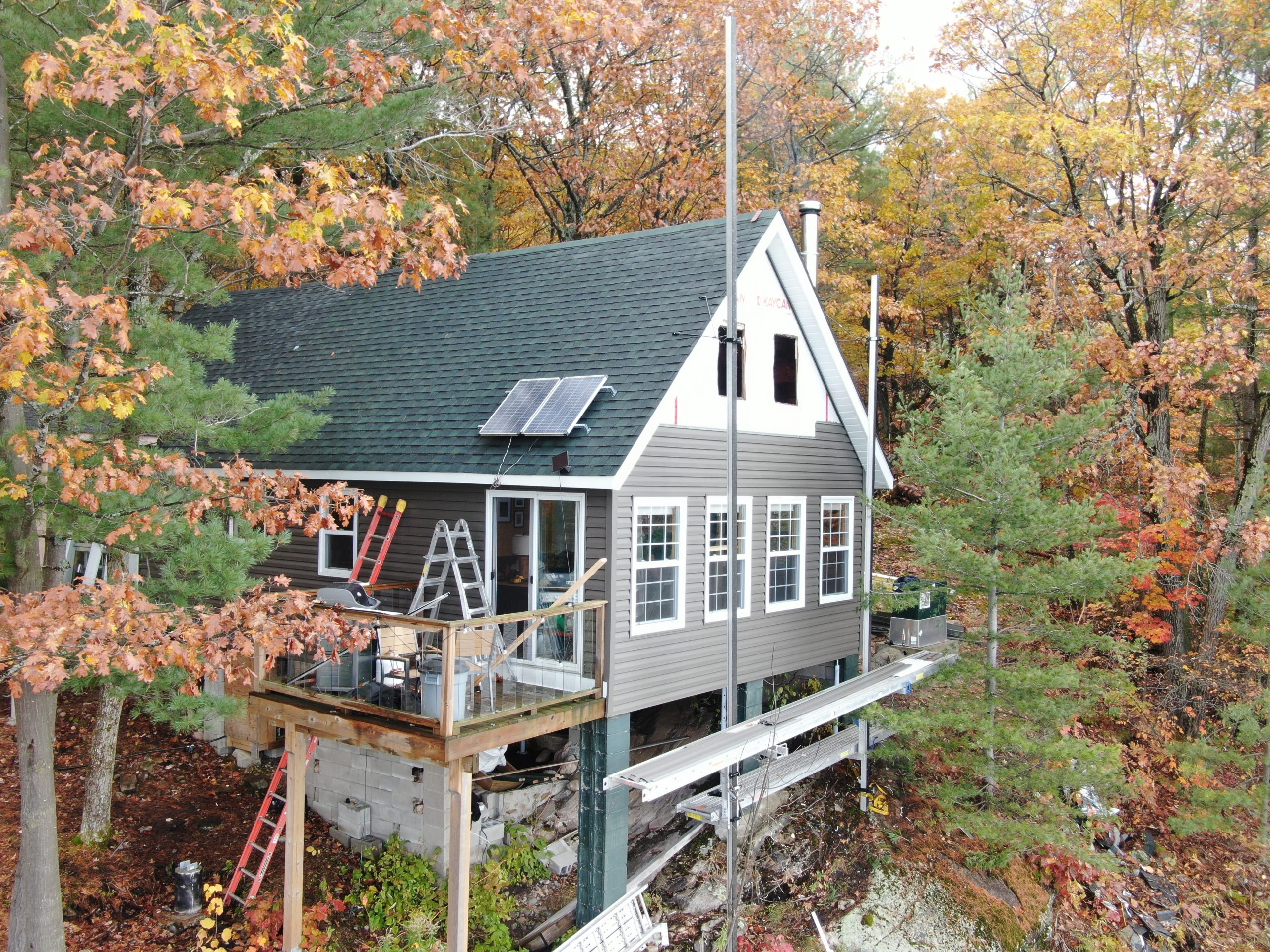
Toronto and GTA cottage owners face real tests when planning cottage roofing Muskoka jobs before winter sets in. Closing a cottage in late fall often brings deep worry. You lock the doors, drain the pipes, and head back south for the season. Meanwhile, your roof must face months of harsh ice and heavy snow all alone. So, prepping your roof deck and building shell before the first blizzard protects your family retreat.
Muskoka sits right inside one of Ontario’s worst snowbelts. Fall storms blow off Georgian Bay, dropping heavy lake snow on Lake Rosseau, Lake Joseph, and Lake of Bays. In fact, winter snow depths often top three feet on shoreline cottage roofs. When wet snow sits on a weak roof, hidden leaks start fast. So, knowing cold-climate cottage care keeps your home dry until spring.
At Ainger Group, we know that running a remote build from two hours away takes total trust. You cannot easily drive north to check on crew work or inspect roof boards. So, cottage owners need a trusted team that gives clear digital updates and solid roof work. Here is our full guide to winterizing your Muskoka roof from afar.
The Science of Winterizing Cottage Roof Systems in Muskoka
Muskoka winters place intense stress on cottage roofs. Unlike city homes in Toronto, shoreline cottages face deep freeze cycles and strong lake winds. Also, winter snow in cottage country holds lots of water. One cubic foot of wet, packed snow can weigh thirty pounds. As snow piles up, tons of dead weight push down on your roof rafters.
When outdoor air shifts around the freezing mark, bad ice dams start to form along cold eaves. Warm indoor air heats the upper roof deck, melting the bottom snow layer. This melt water runs down the slope until it hits the cold roof overhang. Then, the water freezes into a thick ridge of solid ice.
As more melt water flows down, the ice dam blocks the path. So, trapped water backs up right under standard asphalt shingles. Once water gets past the shingle edge, it rots roof plywood and ruins ceiling drywall. Therefore, stopping ice dams before freeze-up is vital for all four-season cottages.
To stop water leaks, standard three-foot roof water peel sheets are not enough in heavy snow zones. Instead, our crews install self-stick water membranes at least six feet up the roof slope. Plus, we lay this thick shield across all roof valleys, chimney joints, and vent pipes. This seal stops backed-up ice water from reaching the wood deck.
Also, picking the right shingle type decides if your roof survives harsh lake storms. High winds off open water can rip cheap builder shingles clean off the deck. For this reason, we install heavy architectural shingles built with tough fabric nail strips. These shingles hold tight against winds up to one hundred thirty kilometers per hour.
Balancing Attic Airflow and R-60 Thermal Defense
Many Muskoka cottage owners think roof leaks only come from broken shingles. But building science shows that poor attic insulation and weak air vents cause most winter roof leaks. When heat escapes through a bare ceiling, it turns the roof into a snow-melting plate. This fast melting makes huge ice dams and spikes winter heating bills.
The current Ontario Building Code sets attic insulation depth at R-60 for our northern zone. This rule calls for about twenty inches of blown-in wool across the entire attic flat. Older cottages in Muskoka often have less than six inches of old batt fill. So, adding blown wool creates a thick heat shield that keeps warmth in your living rooms.
Just as vital is keeping balanced attic airflow under the 1:300 vent rule. This code rule needs one square foot of vent space for every three hundred square feet of attic floor. Crucially, this airflow splits evenly between soffit intake vents and ridge exhaust vents. Continuous airflow carries away warm moisture before it turns into frost on cold roof wood.
During our attic work, our crew puts rigid vent baffles in every single rafter bay. These baffles keep blown wool from plugging the soffits and blocking fresh air flow. Next, we air-seal all attic holes, including light fixtures, wire drops, and plumbing pipes. This whole-home care stops the hot spots that drive winter ice dams.
In addition, checking the attic hatch stops massive heat leaks into the roof space. An unsealed wooden hatch lets warm room air bleed straight up into the cold attic peak. So, we add thick foam board and tight weather strips to every attic hatch. Thus, your cottage attic stays cold, dry, and free of winter frost.
How a Huntsville Roofer Manages Remote Cottage Builds
Planning a Bracebridge roof replacement or Huntsville reroof while living in the GTA can feel stressful. Homeowners worry about hidden plywood rot, missed project dates, and messy job sites. When hiring a Huntsville roofer, property owners must demand complete open proof. At Ainger Group, we built our entire job process for remote cottage owners.
Before any work begins, our Pre-Project Concierge handles all access plans. We confirm gate codes, check property lines, and map out safe truck parking. You get a clear job timeline showing drop-off dates, bin drop points, and crew start times. So, you never have to guess what is happening at your Muskoka cottage.
During the build, our on-site Project Lead sends digital photo updates right to your phone. When we strip off old shingles down to bare wood, we check every square foot of deck. If our crew finds soft spots or rotted plywood, we take clear photos of the damage at once. Then, we send you the photos with a fair, itemized quote to replace the bad wood.
This open process prevents surprise fees on your final bill. Cheap roofers often hide deck fixes in vague clauses or nail shingles over rotten wood to cut corners. In contrast, our photo-proof steps make sure your roof deck is totally solid before new shingles go down. You stay in full control of your project from your desk in Toronto.
Also, our team uses drone cameras to take high-angle roof photos before and after the build. These sharp aerial photos show straight shingle lines, clean metal valley flashings, and sealed vent boots. So, you can review the finished cottage roof with complete confidence without driving two hours north.
The Zero-Headache Standard for Shoreline Properties
Muskoka cottage roofs lots bring unique hurdles that city roofers often fail to handle. Narrow private roads, steep rock slopes, and tall pine trees demand smart site care. Plus, lakefront lots have fragile septic beds, custom stone steps, and boat docks that need defense. Our crews treat your private retreat with the highest level of care.
Before tear-off starts, our team sets up heavy tarps to shield decks, railings, and gardens from falling debris. We use nimble work trailers built for narrow cottage lanes, preventing rutted grass and damaged gravel paths. Furthermore, our workers wear full safety harnesses and tie off on every steep roof pitch. Our safety steps protect your property and cut out homeowner legal risk.
Cleanup is where the Ainger Advantage really stands out for remote owners. Our crews run magnet sweeps across driveways, paths, and parking spots to catch loose nails. We run multiple sweeps to ensure boat trailer tires, car tires, and dog paws stay safe from punctures. In fact, we leave your cottage grounds clean, secure, and ready for winter.
Finally, we protect our clients with five million dollars in liability insurance and full WSIB safety proof. When the job wraps up, we give you our Homeowner Proof Report. This digital file holds full photos of the install, shingle warranty slips, and signed scope approvals. You gain total peace of mind knowing your Muskoka retreat can take on the worst winter storms.
Do not leave your secondary property exposed to winter leaks, ice dams, and heavy snow loads. Booking a professional building-envelope audit before snowfall ensures your roof and attic are ready for sub-zero weather. Contact our regional team today to secure your pre-winter slot.
Claim Your Free 72-Point Assessment
For regular updates follow our LinkedIn.