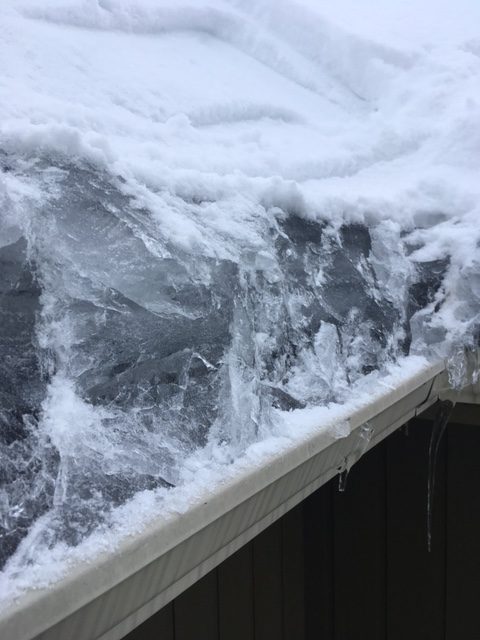
When winter hits Central Ontario, huge walls of thick ice often build up along the edges of local roofs. This heavy ice buildup leads many people to search for strict ice dam prevention Ontario home experts can trust. Often, people assume that bad shingles cause these massive frozen blocks to form over their front doors. However, building science proves that stopping ice dams actually starts deep inside your dark attic space.
Heavy snow covers homes across Simcoe County, Georgian Bay, and Muskoka from late fall until early spring. If your home has a weak roof attic envelope, warm room air bleeds into the cold roof peak. When warm air hits the cold roof boards, it melts the thick snow sitting right on top. This fast snow melt triggers a dangerous cycle that slowly wrecks your home shell.
At Ainger Group, we know that nailing down fresh shingles alone will not stop giant ice blocks from forming. If a roofer ignores your attic airflow and wool depth, the new roof will still leak all winter. Thus, fixing the whole building envelope stops cold drafts and cuts massive heating bills for good. Our clear guide helps you understand how heat loss works so you can protect your home.
How Heat Loss Triggers Massive Ice Dam Growth
To master ice dam prevention Ontario weather demands, you must know how winter heat loss works. Warm air from your living room naturally rises toward your home ceiling and tries to escape outward. If your ceiling lacks thick blown wool, this hot air flows right into the cold attic space. As a result, the whole roof deck heats up and melts the bottom snow layer fast.
This trapped melt water runs down the steep roof slope until it hits the cold gutter edge. Because the gutters hang past the warm house walls, the melt water freezes into solid ice at once. As the ice builds up day by day, it forms a tall wall that blocks all water flow. So, fresh melt water backs up and pools right behind the frozen ice dam.
When water pools behind this frozen wall, it starts pushing backward right under the roof shingles. Eventually, this cold water finds a path through the roof boards and leaks into your clean ceiling drywall. Furthermore, frozen ice expands with huge force, prying off gutters and tearing tough flashing strips apart. Therefore, sealing attic heat leaks cuts off the melt water supply that feeds growing ice dams.
Many homeowners try to chip the ice away with sharp axes or heavy metal snow shovels. But swinging sharp tools at your frozen roof edge often slices through the shingles and voids your warranty. Instead of risking a costly roof repair, smart homeowners focus on fixing the heat loss problem inside. By stopping the heat leak, you stop the ice blocks from ever forming on the eaves.
Stopping Ice Dams with Correct Attic Insulation
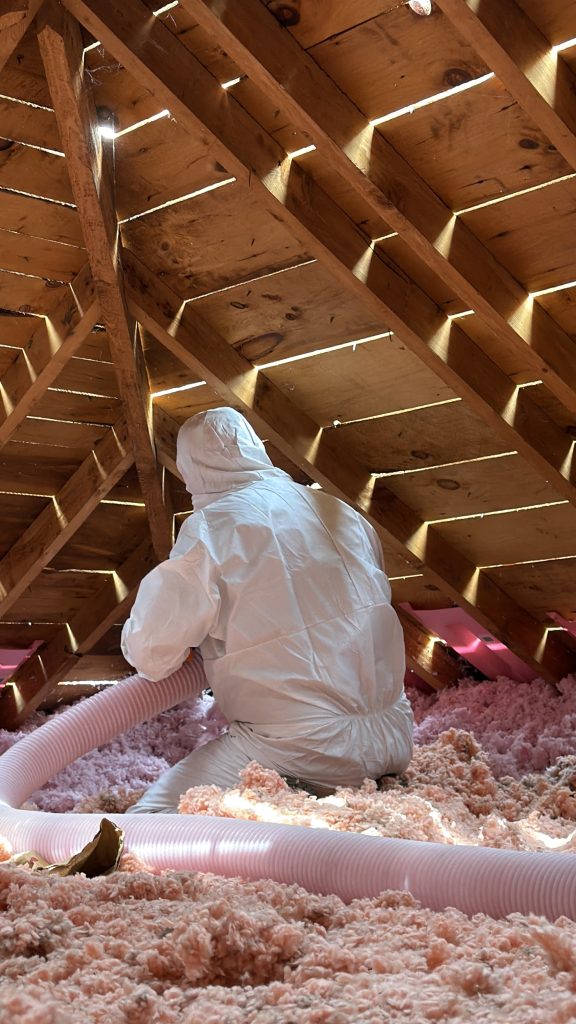
Proper ice dam prevention ontario homes rely on starts with a strong roof attic envelope. This system needs a thick heat shield to keep warm indoor air inside your living rooms. In fact, the local building code calls for an R-60 wool rating in all cold northern zones. This strict rule means your ceiling needs about twenty inches of fluffy blown wool across the flat deck. But many older homes across Barrie and Orillia hold less than six inches of flat, tired batt fill.
When your attic lacks thick fill, your home furnace works overtime to replace the lost ceiling heat. In contrast, upgrading to full R-60 blown wool traps the heat right inside your cozy family rooms. This thick wool blanket stops room heat from warming the roof deck and melting the top snow layer. So, adding thick blown wool forms the first major step in true winter roof defense.
Also, simply blowing in deep wool does not solve all heat loss problems on its own. Our crews must also air-seal all tiny gaps where wires, pipes, and pot lights cut through the drywall. Even a small unsealed wire hole lets a steady stream of hot air jet into the cold roof peak. Plus, we add thick foam board and tight weather strips to the main wooden attic hatch door.
Without these key sealing steps, the new blown wool just acts like a sweater on a windy day. The cold drafts blow right through the fluffy wool, stealing the heat you just paid to trap inside. For this reason, our skilled crews always hunt down and seal these hidden gaps before blowing the new wool. Thus, your home gains a solid thermal block that truly stops winter heat loss in its tracks.
The Crucial Role of Balanced Attic Ventilation Barrie
Upgrading your ceiling wool is only half the battle when fixing a weak roof attic envelope. For true ice dam prevention Ontario homeowners need, you must also balance attic air flow. You must ensure proper attic ventilation Barrie weather rules demand for fresh air exchange. Without cold outside air moving through the peak, warm moisture builds up and forms thick frost on the wood. When spring comes, this thick frost melts and rains down onto the dry ceiling wool.
A healthy roof peak breathes by pulling cold fresh air in through the lower edge soffit vents. Then, the warm, wet air flows up the roof slope and pushes out through the top ridge vents. Crucially, this steady flow of cold outside air keeps the roof deck freezing cold all winter long. Because the roof deck stays freezing cold, the top snow layer never melts and ice dams cannot grow.
During a full roof and attic check, our team checks the vital soffit vent intake areas closely. Sometimes, careless roofers blow deep wool right over the soffit vents, choking off all fresh air intake completely. To fix this, our crews install stiff plastic baffles in every single rafter bay to hold the wool back. Thus, cold outside air flows freely into the attic to keep the wood dry and fully frost-free.
Furthermore, a dry attic space protects your home framing from deep structural wood rot over time. If damp frost stays trapped inside the dark roof peak, black mold spreads quickly across the plywood sheets. By keeping the air flowing fast, balanced vents flush out the wet air before mold spores can stick. So, fixing your roof vents keeps your home structurally sound and your indoor air clean.
The Ainger Advantage: Full Building Envelope Solutions
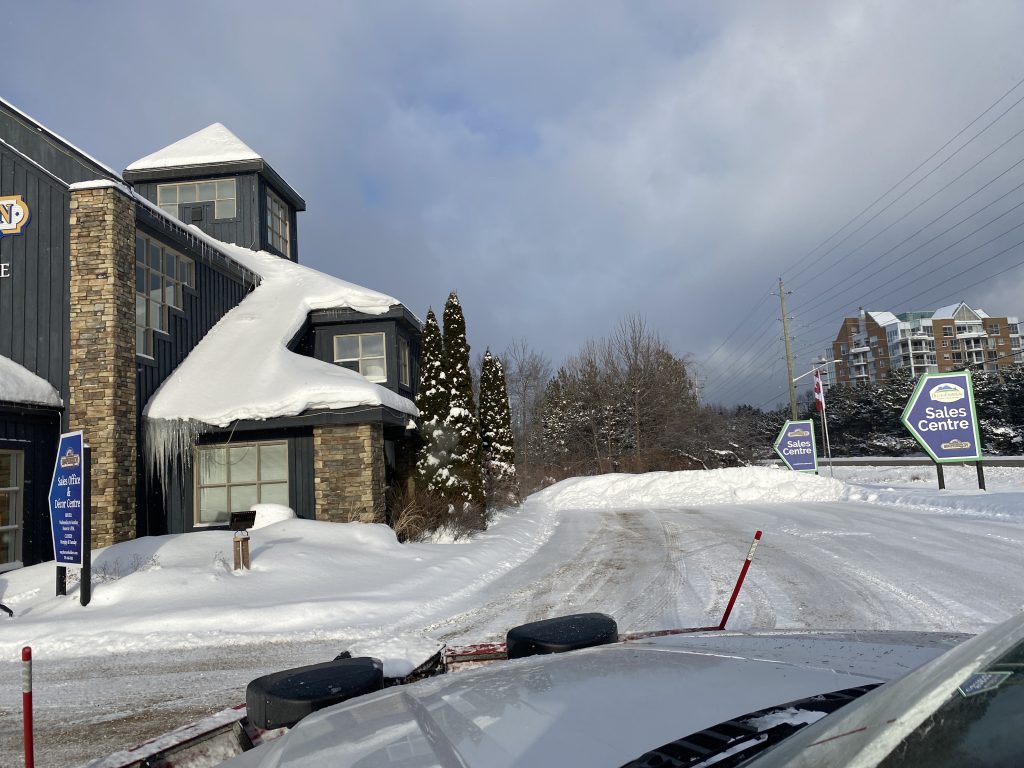
Many cheap roofers promise quick fixes for winter leaks by just nailing down water peel sheets along the eaves. But simply adding peel sheets fails to provide the real ice dam prevention Ontario weather demands. At Ainger Group, we treat the root cause of the problem by looking at the whole roof system. We balance your attic air flow, air-seal hot gaps, and upgrade your wool depth to stop heat loss.
When you hire Ainger Group, our team provides full WSIB safety proof and five million dollars in safety insurance. Next, a dedicated Pre-Project Concierge sets up your site plans and answers all your questions clearly. Meanwhile, an on-site Project Lead watches every build step with care to ensure top quality craft work. You never take on legal risk when our trained crews work on your steep home roof.
Also, we treat your property with complete care from the moment our work trucks pull up outside. Our crews lay heavy tarps across your wooden decks and garden beds to catch stray roof debris. In fact, we take pride in leaving your yard cleaner than we found it when we first arrived. So, you can trust our team to respect your home while we upgrade your building envelope.
Plus, our crews run magnet sweepers across your driveway and lawn many times to catch all loose metal nails. Last, we deliver our clear Homeowner Proof Report with full photo proof when the project wraps up. This clear report shows your new blown wool depth, clear air vents, and sealed roof seams. You get total price clarity, zero hidden fees, and lasting peace of mind all winter.
Claim Your Free 72-Point Assessment
For regular updates follow our LinkedIn.