
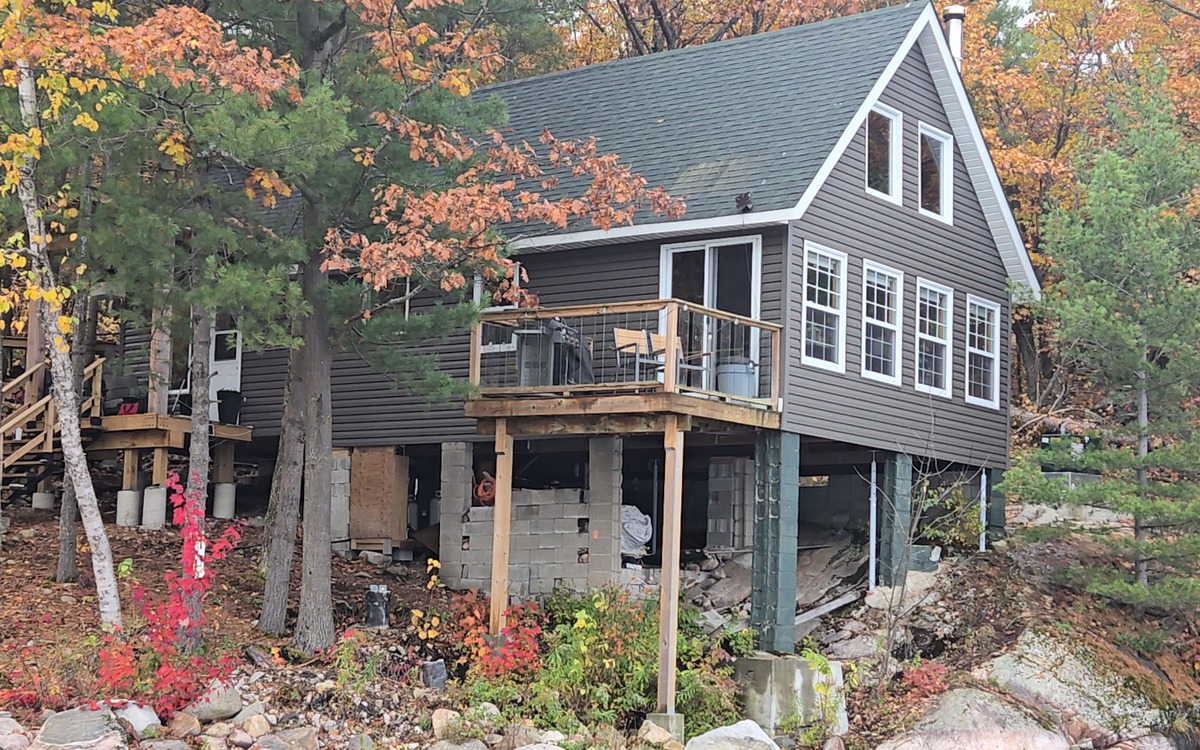
Woodpecker siding damage in Muskoka can begin with small holes, tapping sounds or loose pieces near a cottage wall. Some birds search for insects. Others drum to communicate or create a nesting cavity.
However, any opening can expose the wall system to rain and freezing temperatures. Early fall checks help homeowners document damage before winter hides important details.
Why Woodpeckers Target Cottage Siding
Woodpeckers do not strike every wall for the same reason. First, a bird may search for insects beneath wood or damaged cladding. Tapping can help it locate hollow spaces.
Second, birds may drum on resonant surfaces. This behaviour creates sound without always producing a deep hole. Metal trim, eavestroughs and hollow siding can amplify the noise.
Finally, a bird may begin a roosting or nesting cavity. These openings are usually larger and deeper. Therefore, homeowners should identify the activity before covering anything.
Wooded lots can place homes close to natural habitat. Meanwhile, aging boards, open seams or hidden insects may make one wall more attractive for siding damage in Muskoka.
Signs of Woodpecker Siding Damage in Muskoka
Damage may appear around gables, trim, soffits or shaded walls. Start with a ground-level inspection on a clear day. Then, photograph each concern from a safe distance.
Watch for:
- Small, evenly spaced holes
- One larger cavity in a panel or trim board
- Fresh wood chips below the wall
- Repeated tapping at the same time each day
- Cracked or loose siding around an opening
- Bent metal trim
- Damage under the eaves
- Insects entering or leaving a hole
- Nesting material near a cavity
- Stains below damaged cladding
- Interior drafts near the affected wall
- Sounds inside a wall or attic
Do not assume every mark came from a woodpecker. Insects, squirrels and weather can create different patterns. A professional assessment can help separate the cause from the symptom.
Why Small Siding Holes Need Attention
Siding acts as part of a layered exterior system. It sheds rain and protects the wall assembly beneath it. Therefore, a hole can interrupt that protection.
Wind-driven rain may enter around broken edges. Then, moisture can reach the weather barrier or sheathing. Repeated wetting may damage vulnerable materials.
Freezing temperatures can also stress open cracks. Water expands when it freezes. Consequently, a small defect may become more noticeable through winter causing more siding damage in Muskoka.
An opening may also provide access for insects or small animals. However, homeowners should never seal a cavity before confirming it is empty.
Check for an Active Nest Before Repairs
Bird protection must come before exterior repair. An occupied nest may contain a live bird or viable egg. Therefore, disturbing or blocking it can harm wildlife and create legal concerns.
Environment and Climate Change Canada explains that occupied migratory bird nests receive protection. Certain listed species also receive added nest protection.
The rules can vary by species and nest status. Consequently, homeowners should contact a qualified wildlife professional when a cavity may be active. That person can identify the bird and recommend compliant next steps.
Do not place filler, foam or mesh over an opening while birds use it. Likewise, avoid loud deterrents near an active nest without professional guidance.
Different Pecking Patterns Can Suggest Different Causes
Small holes in a line may suggest feeding activity. The bird could be following insects beneath one board or trim section. Therefore, the wall may need a pest assessment before siding repairs begin.
A wide, deep opening may suggest a roost or nest cavity. In contrast, shallow marks on metal may result from drumming. The surface produces sound but may not offer food.
Repeated activity on one damp wall can also signal material problems. Moisture may support insects or soften wood components. Consequently, the inspection should review more than the visible hole. Siding damage in Muskoka.
Photographing the pattern helps professionals understand what happened. However, do not approach an active bird or climb to a high cavity.
Which Siding Materials Can Be Affected?
Wood siding can attract birds searching for insects or a workable cavity. Engineered wood can also suffer impact damage when a bird repeatedly targets one location.
Vinyl siding may crack or develop openings near trim. In addition, a hollow wall section can produce loud drumming sounds. The bird may return because the surface resonates.
Fibre cement and metal usually resist deep pecking differently. However, joints, trim and adjacent wood components may remain vulnerable. No cladding removes every risk.
Material choice should consider the entire wall design. Installation, moisture control, trim details and maintenance all affect long-term performance.
Do Not Repair Only the Visible Hole
A small patch may improve appearance without solving the cause. For example, insects could remain behind the siding. Moisture could also continue entering through an open transition.
The damaged area may need careful removal. Then, the contractor can inspect the weather barrier, sheathing and trim. Any pest activity should be handled by the appropriate specialist.
Next, the wall system can be restored before new cladding is installed. This order matters because siding should not hide wet or damaged materials.
Avoid filling unknown cavities with spray foam. The product may trap an animal, complicate repairs or expand against surrounding components.
What a Professional Siding Assessment Includes
An assessment for woodpecker siding damage in Muskoka should examine the affected wall and nearby transitions. First, the contractor documents the hole pattern and loose materials. Next, they look for possible moisture paths.
The assessment may include:
- Siding panels or boards around the opening
- Window and door trim
- Soffit and fascia transitions
- Corners and utility penetrations
- Weather barrier where accessible
- Sheathing condition
- Signs of insects
- Interior staining or drafts
- Repeated damage on nearby walls
- Previous patches or filler
- Material availability for matching repairs
- Access needs for upper walls
The contractor should explain which concerns belong to a wildlife specialist. Most importantly, the repair should begin only after any active nest issue is resolved.
Repair Versus Siding Replacement
A local repair may suit isolated damage. For example, a contractor might replace several boards or panels after the cavity becomes legally available.
However, broader replacement may offer better value when damage affects several areas. It may also help when existing cladding is brittle, faded or unavailable.
Consider wider work when:
- Several walls show repeated holes
- Moisture has reached the sheathing
- Insect damage extends behind the siding
- Panels break during removal
- Matching colours or profiles are unavailable
- The existing siding is near replacement age
- Trim and weather barriers also need work
A qualified contractor should compare both options. Therefore, homeowners can choose a scope based on condition instead of fear.
For broader warning signs, read how to know when siding needs replacement.
Humane Deterrence After the Cause Is Addressed
Deterrents should begin only after professionals confirm no protected nest will be disturbed. Then, the strategy can address the reason birds return.
If insects caused the activity, pest treatment may reduce the food source. If drumming caused it, visual movement or sound changes may help. Physical exclusion can also prevent access to one wall area.
The Canadian Wildlife Federation suggests angled light netting for damage beneath eaves. However, installation must avoid trapping birds or blocking ventilation.
Tree trimming may reduce direct access in some cases. Nevertheless, homeowners should consider tree health, property rules and wildlife timing.
Avoid sticky products or harmful traps. Instead, ask a wildlife professional for humane methods suited to the bird and building.
Safe Fall Checks for Muskoka Homeowners
Walk around the property during daylight. First, listen for repeated tapping. Next, inspect the ground for chips or broken siding.
Use binoculars to view upper gables and soffits. Also check inside for stains, drafts or animal sounds. Keep a dated record of each observation.
Do not use a ladder on rock, wet leaves or uneven cottage ground. In addition, never lean over a roof edge to inspect siding below.
If the property is seasonal, arrange an assessment before closing it. A vacant cottage may hide new damage until spring.

Prepare Muskoka Siding Before Winter
Early fall offers time to identify the bird, check nest status and plan repairs. Therefore, it is better to investigate before freezing weather arrives.
Inspect siding after strong wind and rain. Then, compare damaged areas with earlier photographs. Look for expanding cracks, new stains or fresh debris.
Also review nearby soffits and fascia. Birds may move between exterior components after one opening is blocked. A complete assessment can identify connected weak points.
Choose Ainger Group for Muskoka Siding Assessments
Woodpecker siding damage in Muskoka deserves a careful response. The right plan protects wildlife, addresses the cause and restores the wall system.
Ainger Group Roofing and Exteriors installs residential siding across Muskoka. Our team can assess damaged cladding and explain suitable repair or replacement options.
Explore our residential siding services for material and installation information. You can also visit our Muskoka roofing and exteriors page for local service details.
When you are ready, contact Ainger Group to request a free exterior assessment.