
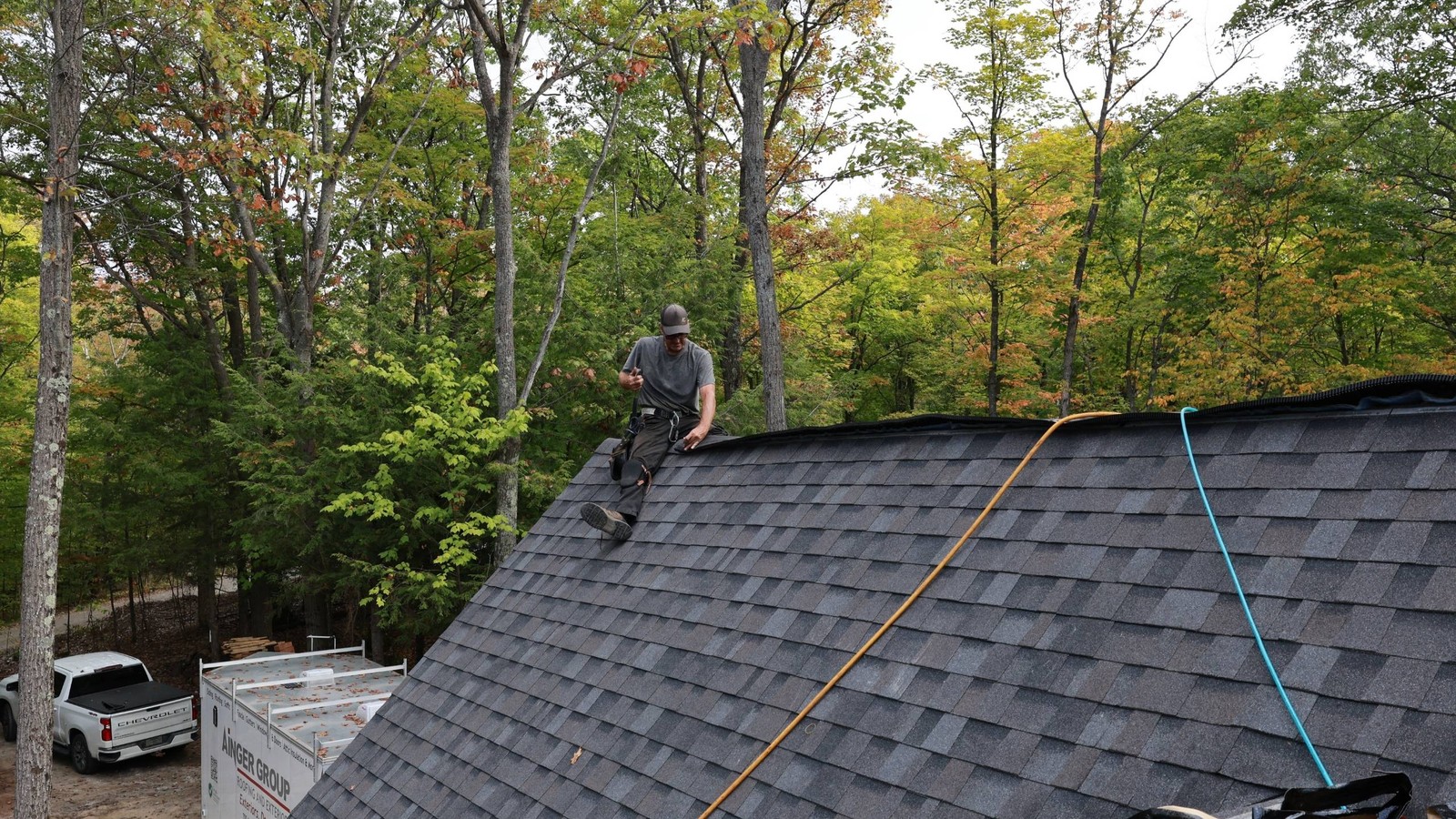
A fall roof inspection in Orillia can reveal problems before snow and freezing temperatures arrive. Small defects may become harder to address once winter begins. Therefore, October is a practical time to assess your residential roofing system.
Orillia homes face wind, heavy snow and repeated freeze-thaw cycles. In addition, clogged drainage and attic heat loss can create extra winter stress. This guide explains what homeowners can check safely and when professional help makes sense.
Why Schedule a Fall Roof Inspection in Orillia?
Winter weather can magnify existing roof problems. For example, a loose shingle may lift further during strong wind. A small flashing gap may also allow melting snow to enter the roof system.
Meanwhile, leaves can block eavestroughs and downspouts. Trapped water may then freeze near the roof edge. As a result, drainage problems can contribute to leaks, damaged fascia or slippery areas below.
A pre-winter roof assessment gives homeowners time to understand these risks. It can also identify repairs that should happen before cold weather limits safe working conditions.
However, an inspection does not always lead to roof replacement. Many homes only require maintenance or a focused repair. The roof’s age, condition and damage pattern should guide the recommendation.
Begin With a Safe Ground-Level Roof Check
First, walk around your property during daylight. Stay on firm ground and use binoculars when necessary. Never climb onto the roof to complete a homeowner inspection.
Look at every visible roof slope from several angles. Changes in colour, texture or alignment may reveal damaged areas. In addition, compare the roofline with older photographs when possible.
Watch for these warning signs:
- Missing, lifted or crooked shingles
- Cracked or curling shingle edges
- Dark patches or uneven wear
- Exposed roof deck or underlayment
- Loose metal near chimneys or vents
- Sagging sections along the roofline
- Debris collected in valleys
- Tree branches touching the roof
Next, photograph anything unusual from a safe position. Clear pictures can help a contractor understand where the concern appears.
Check Shingles for Fall and Winter Damage
Shingles form the visible surface of many Orillia roofs. However, every shingle must work with the layers underneath it. Damage to one area can expose the wider system to moisture.
During a fall roof inspection in Orillia, look for shingles that appear raised or displaced. Strong winds can loosen seals and fasteners. Consequently, affected tabs may lift during the next storm.
Also, check for cracked corners and missing pieces. Temperature changes can make older shingles less flexible. Therefore, worn materials may become more vulnerable as winter approaches.
Granules deserve attention as well. Some granule loss is normal throughout a roof’s life. However, heavy buildup inside eavestroughs may indicate advanced surface wear.
Do not judge the roof by one shingle alone. Instead, consider the age, location and pattern of damage. A professional can determine whether the issue is isolated or widespread.
Inspect Flashing, Valleys and Roof Openings
Roof transitions require careful water control. These areas include chimneys, plumbing vents, skylights and wall connections. Metal flashing helps direct water away from vulnerable joints.
From the ground, look for visible gaps, bent metal or missing sealant. Rust stains may also suggest long-term moisture exposure. However, some flashing defects remain hidden beneath roofing materials.
Valleys carry large amounts of rain and melting snow. Therefore, they should remain clear of leaves, branches and other debris. A blocked valley can slow drainage and hold moisture against the shingles.
Roof vents should also appear secure and undamaged. Cracked housings or loose covers can allow water entry. In addition, damaged vents may affect attic airflow.
If you recently experienced severe weather, review our guide to finding signs of roof storm damage.

Examine Eavestroughs and Downspouts
Roof drainage is a key part of winter preparation in Orillia. Eavestroughs collect water from the roof. Meanwhile, downspouts move that water away from the home.
First, check for overflowing sections during rainfall. Overflow may indicate leaves, damaged outlets or an incorrect slope. Next, look for loose fasteners, open seams and sagging troughs.
Downspouts should remain connected and direct water away from the foundation. In addition, discharge points should not create icy walkways or pooling near entrances.
Watch for these drainage concerns:
- Leaves or shingle granules inside the eavestrough
- Water marks on fascia or siding
- Loose or separated eavestrough sections
- Downspouts pulling away from the wall
- Crushed or blocked downspout extensions
- Soil erosion below the roof edge
- Water collecting near the foundation
Never lean a ladder against an unstable eavestrough. If cleaning requires roof access, hire a qualified professional instead.
Look Inside for Early Leak Warning Signs
Some roof problems appear indoors before they become visible outside. Therefore, inspect upper rooms after heavy rain. Look closely near ceilings, exterior walls and roof penetrations.
Common interior warning signs include:
- Yellow or brown ceiling stains
- Peeling paint near upper walls
- Damp drywall or trim
- Musty odours in upstairs rooms
- Water marks around skylights
- Drips near chimneys or exhaust vents
However, a stain does not reveal the exact entry point. Water can travel along framing before reaching the ceiling. As a result, the visible mark may appear far from the damaged roofing component.
Document the location and date of each symptom. Then, arrange an assessment before the next major storm.
Include the Attic in Your Autumn Roof Checklist
A complete seasonal roof inspection should include the attic. Roofing, insulation and ventilation work together during winter. Problems in one area can affect the others.
First, look for damp insulation, dark wood or signs of condensation. Frost may also appear once outdoor temperatures drop. However, do not enter an attic unless access is safe and stable.
Next, notice whether the insulation appears thin, compressed or uneven. Poor coverage can allow household heat to reach the roof deck. Consequently, rooftop snow may melt unevenly and refreeze near colder eaves.
Air leakage can create a similar problem. Warm air may escape around attic hatches, wiring and ceiling openings. Therefore, adding insulation without addressing air gaps may leave part of the problem unresolved.
Ventilation also helps manage attic heat and moisture. Intake and exhaust openings should remain clear. Learn more about improving attic ventilation before winter.
Trim Branches and Remove Loose Exterior Hazards
Nearby trees can create roof risks during fall and winter. Branches may scrape shingles during high winds. In addition, heavy snow can cause weak limbs to break.
From the ground, identify branches that hang over the roof or touch the surface. Also, look for dead limbs near the house, driveway or entrance.
Hire a trained tree professional for overhead cutting. Never trim large branches while standing on a ladder or roof. Safe clearance protects both the roofing system and the people below.
Loose exterior items also require attention. Secure seasonal decorations, satellite components and other objects near the roofline. Strong wind can turn unsecured materials into hazards.
What a Professional Pre-Winter Roof Assessment Includes
Homeowners can identify several warning signs safely. However, a qualified roofer can examine areas that are difficult to assess from the ground.
A professional inspection may review:
- Shingle condition and fastening
- Flashing around chimneys, walls and vents
- Valleys and other drainage paths
- Eavestrough and fascia condition
- Roof penetrations and sealants
- Visible roof deck movement
- Attic moisture and ventilation concerns
- Interior evidence of water entry
The contractor should explain each finding clearly. In addition, photographs can help homeowners understand the location and severity of defects.
Ask whether the roof requires maintenance, repair or replacement. Most importantly, request the reasoning behind the recommendation. A detailed assessment should separate urgent concerns from items that only need monitoring.
When Roof Problems Need Prompt Attention
Some warning signs should not wait for a routine appointment. Active water entry requires quick action. Sagging rooflines and widespread storm damage also deserve immediate professional attention.
Contact a roofer promptly if you notice:
- Water entering the home
- Several missing shingles after a storm
- Loose materials hanging near the roof edge
- A visibly sagging roof section
- Damaged flashing around a chimney
- Fallen branches resting on the roof
- Wet insulation or significant attic moisture
Keep people away from the affected area until it is safe. In addition, avoid entering wet attics or touching water near electrical fixtures.
Plan Your Fall Roof Inspection in Orillia
A fall roof inspection in Orillia can help you enter winter with clearer information. First, check the roof safely from the ground. Next, review drainage, indoor warning signs and accessible attic conditions.
Then, document anything unusual and arrange professional help when needed. Early attention may prevent a small defect from becoming a disruptive winter leak.
Ainger Group provides residential roofing and exterior assessments throughout Orillia. Our team considers the roof, drainage, ventilation and attic conditions together. Learn more about our residential roofing services in Orillia.
Would you like help assessing your home before winter? Please contact Ainger Group to request an appointment.