
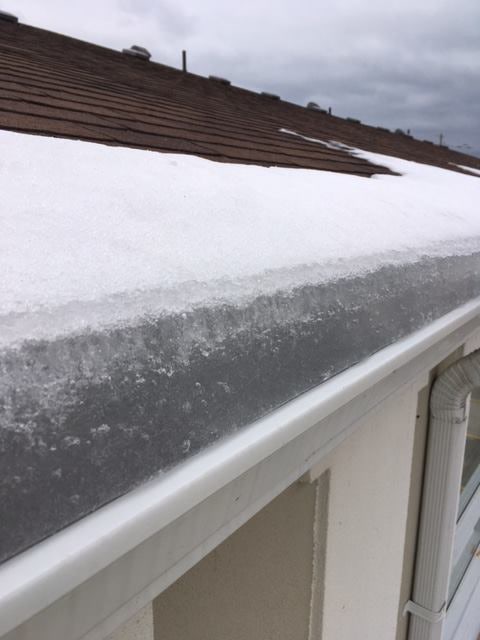
As the winter chill settles over Collingwood, homeowners face a unique set of challenges. During the winter months, picturesque snow-covered rooftops can hide a host of problems, with ice dams being one of the most common and damaging issues. In this article, we will explore the causes of ice dams in Collingwood winter roofing, how they can lead to leaks, and most importantly, what you can do to prevent these winter roofing problems.
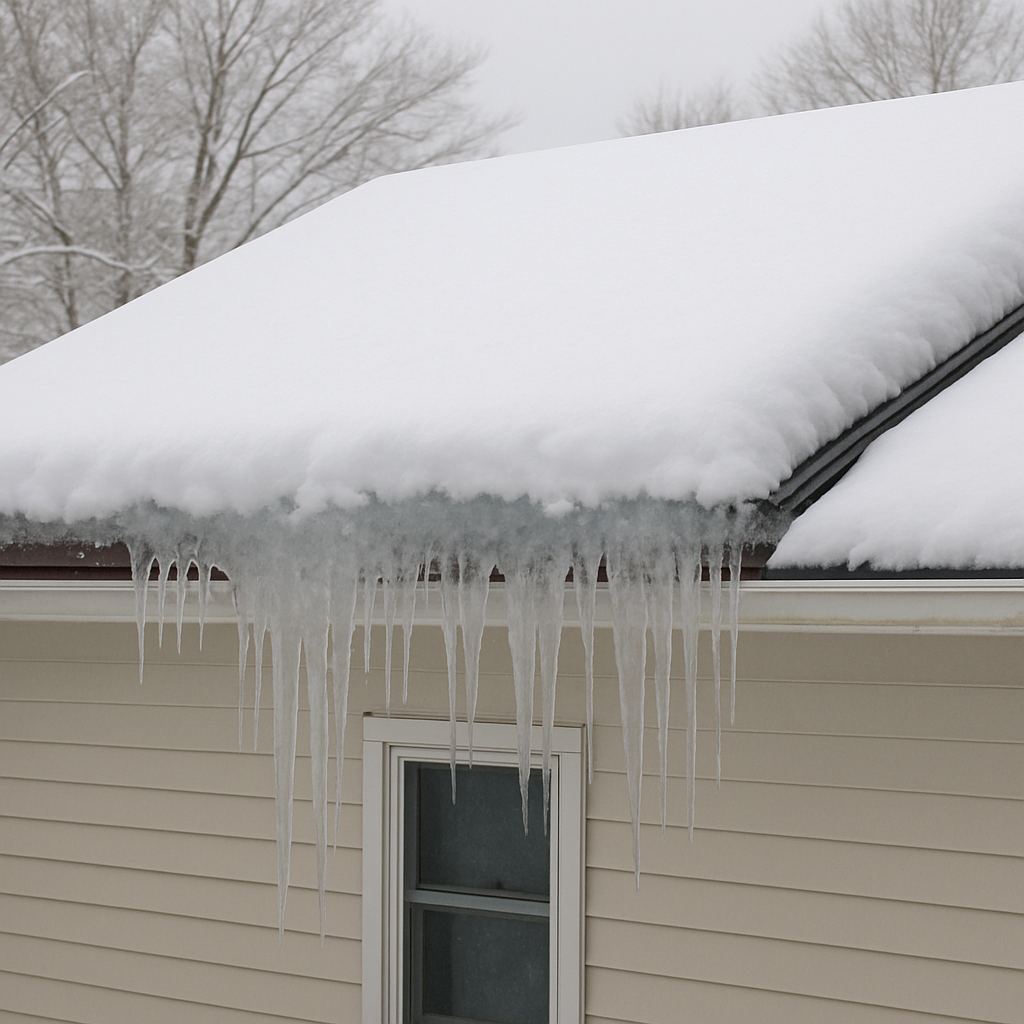
Ice dams form when the snow on your roof melts, slides down, and refreezes at the edges. This creates a barrier that prevents melting snow from draining off the roof. The trapped water can then seep under shingles and into your home, causing leaks and potentially serious damage to your roofing structure.
How Do Ice Dams Form?
Ice dams are a result of a combination of factors, including roof temperature, snow accumulation, and weather conditions. Here’s how it happens:
- Heat Loss: Warm air from your home escapes into the attic, causing the roof surface to warm up.
- Snow Melt: The heat causes the snow on the roof to melt.
- Refreezing: As the melted water runs down the roof, it reaches the colder edges and refreezes, forming a dam.
This cycle can continue as long as the conditions are right, leading to significant ice buildup.
Risks of Ice Dams
The primary risk associated with ice dams is water damage. When water backs up behind the dam, it can seep into the roof, walls, and insulation. This can lead to:
- Ceiling and Wall Damage: Water stains, peeling paint, and structural damage.
- Mold Growth: The presence of moisture can lead to mold, which poses health risks.
- Insulation Damage: Waterlogged insulation loses its effectiveness, leading to higher energy bills.
Collingwood Winter Roofing Maintenance Tips
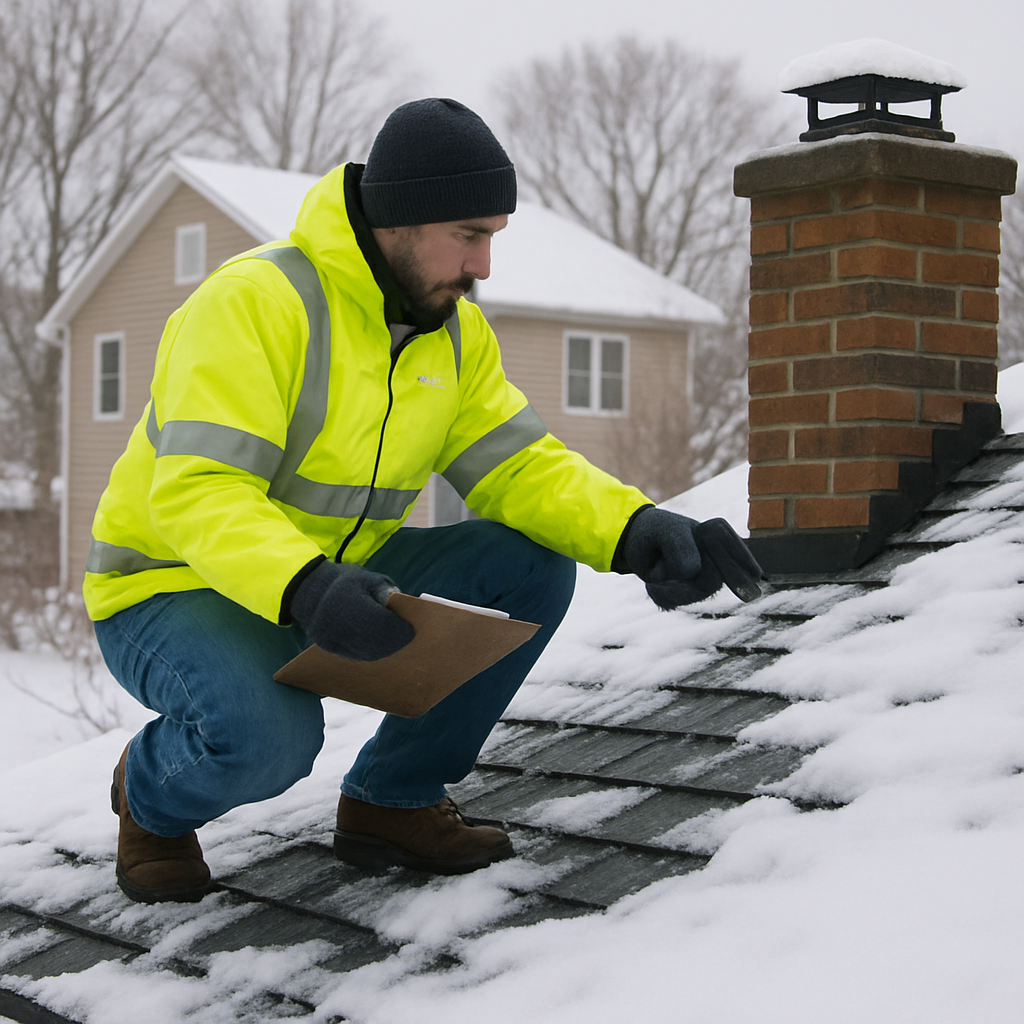
To help prevent ice dams and other Collingwood winter roofing problems, regular maintenance is essential. Additionally, following a consistent roof care routine can help protect your home throughout the colder months. Here are some tips to help keep your roof in top shape:
Proper Insulation and Ventilation
Ensuring your attic is properly insulated and ventilated is the first step in ice dam prevention. A well-insulated attic keeps warm air from escaping, while proper ventilation allows cold air to circulate, maintaining a consistent roof temperature.
- Insulate: Ensure your attic has adequate insulation to keep warm air from reaching the roof.
- Ventilate: Install vents to allow cold air to flow freely in the attic, maintaining a uniform temperature.
Keep Gutters Clean
Additionally, clogged gutters can worsen ice dam problems by preventing melted snow from draining properly. Therefore, regularly cleaning your gutters and removing debris helps maintain proper drainage and reduces the risk of winter roofing issues.
- Regular Cleaning: Clear leaves and debris before the snow arrives.
- Install Gutter Guards: Consider installing gutter guards to keep debris out.
Remove Snow Safely
If a heavy snowstorm hits, consider removing snow from your roof to prevent ice dams from forming. Use a roof rake to safely remove snow without damaging shingles.
- Roof Rake: Use a long-handled roof rake to remove snow from the edge of the roof.
- Professional Help: For steep or high roofs, hire a professional to ensure safety.
Professional Collingwood Winter Roofing
Sometimes, despite your best efforts, ice dams and leaks may still occur. When these issues occur, it is best to call in the experts. In addition, roofing professionals in Collingwood can assess the situation and provide solutions tailored to your specific needs.
When to Call a Professional
- Persistent Ice Dams: If ice dams continue to form despite your prevention efforts.
- Visible Damage: Water stains, leaks, or damage to the roof structure.
- Safety Concerns: If snow and ice removal is too risky to handle on your own.
Benefits of Hiring a Professional Collingwood Winter roofing Company
- Expertise: Professionals have the knowledge and tools to address winter roofing problems effectively.
- Safety: They are equipped to handle the hazards of roof work in winter conditions.
- Peace of Mind: Ensures that your roof is properly maintained and protected against winter damage.
Long-Term Solutions for Ice Dam Prevention
For a more permanent solution to ice dams, consider these long-term strategies:
Roof and Attic Upgrades
- Upgrade Insulation: Improve attic insulation to prevent heat loss.
- Install Heat Cables: Heat cables can be installed along the roof’s edge to melt snow and ice.
- Roof Replacement: Consider replacing your roof with materials designed to resist ice dam formation.
Regular Inspections
Schedule regular roof inspections to catch potential issues early. A professional can identify weaknesses in your roofing system and recommend necessary repairs or upgrades.
Collingwood Winter Roofing
Collingwood winter roofing problems, like ice dams, can lead to significant damage if not addressed. By understanding how ice dams form and taking preventive measures, you can protect your home from leaks and other winter-related issues. Whether you choose to tackle maintenance yourself or hire professional services, staying proactive is key to keeping your roof in excellent condition throughout the winter months.
Remember, a well-maintained roof not only protects your home but also enhances its value and efficiency. Stay warm and safe this winter by keeping your roof in top shape!